

The Full-Stack Researcher
Guides, Case Studies, & Actionable Advice for Mixed-Methods User Research

The Most Misunderstood Research Method In All The Land
People reach for conjoint analysis thinking it measures "what matters most". It only measures that in a purchase decision. Here's what to use instead.
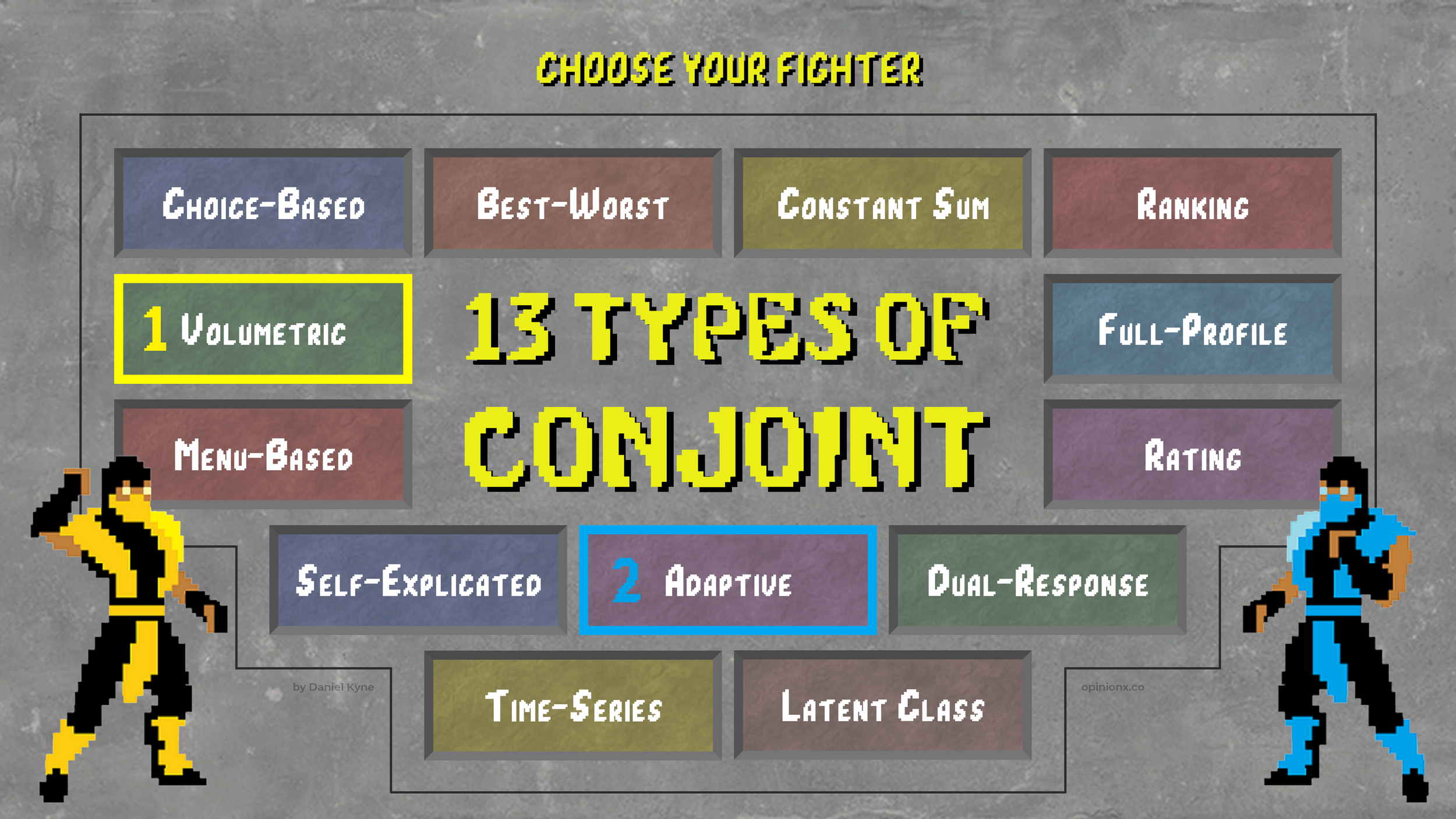
13 Types of Conjoint Analysis Explained (With Image Examples)
Explanations (with examples) for the 13 most popular conjoint analysis methods, including types like choice-based, best-worst, ranking, self-explicated, volumetric, menu-based, adaptive, and more.

8 Alternatives To Conjoint Analysis For User Research
Conjoint analysis is an advanced research method for measuring attribute importance in a product mix. It’s complicated, expensive, and can only be used in a handful of research scenarios. Here are 8 examples of alternative research methods to consider instead.
![How To Calculate Conjoint Analysis Results [8 Steps]](https://images.squarespace-cdn.com/content/v1/5e22fb8d8524a16d5bd5683c/1691430551484-X7AY2CQZI3F2PWB0TL1S/How+To+Calculate+Conjoint+Analysis+Results+Scores+Utility+Part-Worths+Data+Linear+Regression+Conjoint+Survey.png)
How To Calculate Conjoint Analysis Results [8 Steps]
8-step guide explaining how conjoint data is collected, analyzed, and manually computed (with formulas) to calculate part-worth utility scores for each attribute and level in a conjoint analysis survey.
![When To Use Conjoint Analysis [5 Criteria & 10 Examples]](https://images.squarespace-cdn.com/content/v1/5e22fb8d8524a16d5bd5683c/1691433503009-1NGZP8LZTKIIU27YZQQ5/What+is+Conjoint+Analysis.png)
When To Use Conjoint Analysis [5 Criteria & 10 Examples]
Five criteria conjoint needs, three projects it's great for, and ten scenarios where a simpler, cheaper method gets you a better answer.
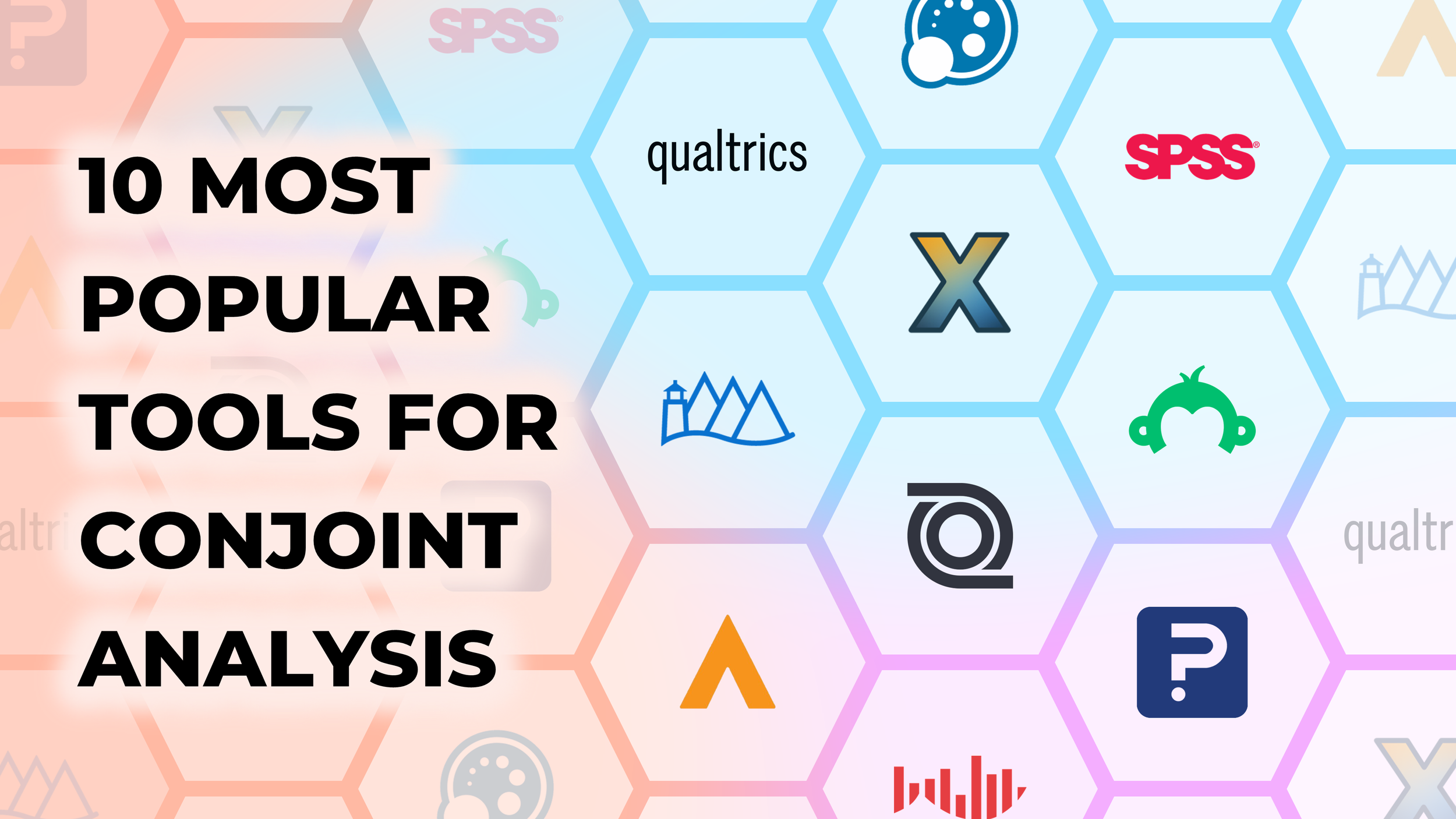
Comparing The Top 10 Most Popular Conjoint Analysis Tools (Free vs Paid)
I reviewed the 10 most popular conjoint analysis tools, comparing their pricing (free vs paid), functionality, usability, and more. Includes Qualtrics, Conjointly, Sawtooth, OpinionX, SurveyMonkey, and more.
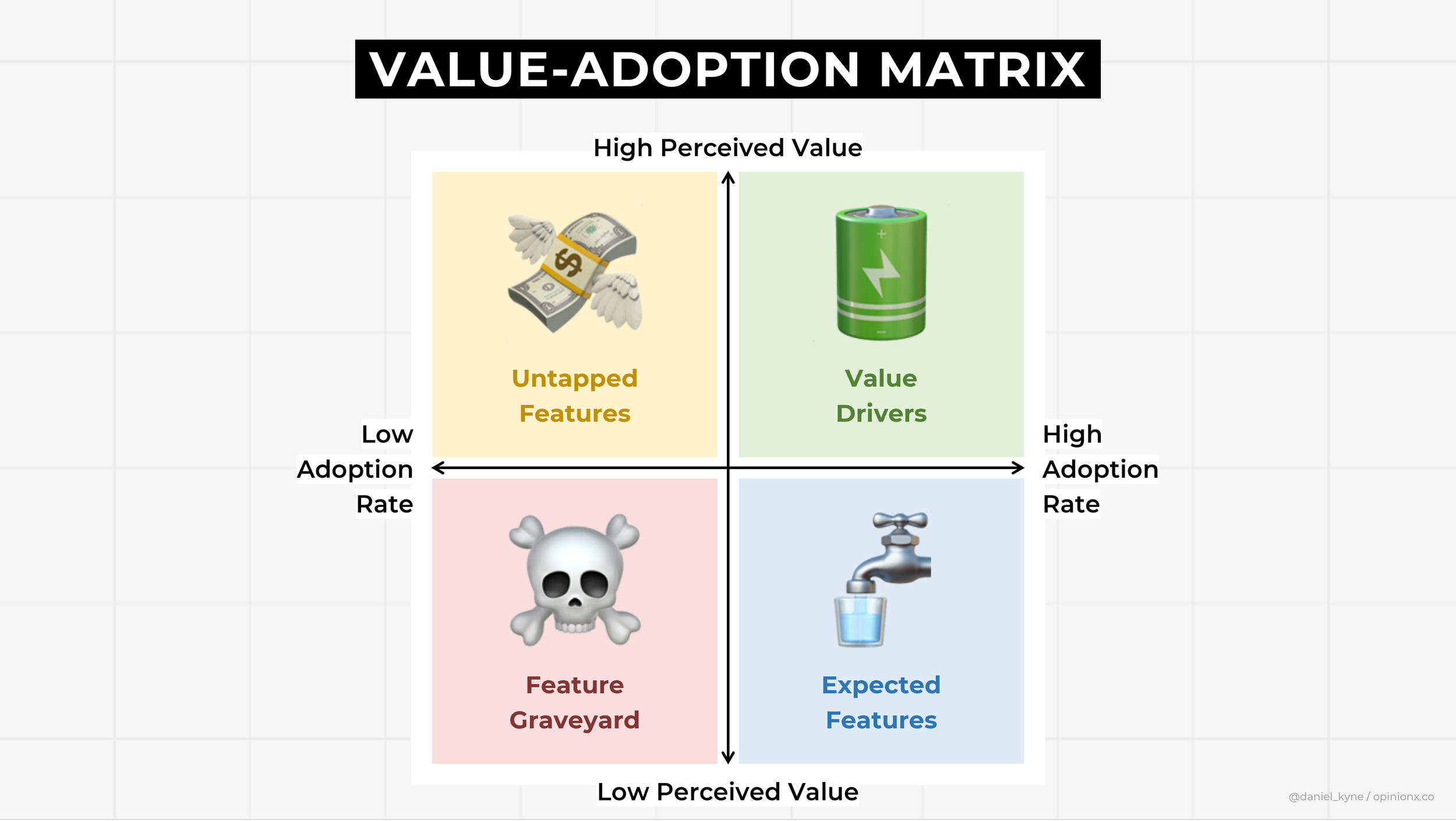
The Value-Adoption Matrix: How To Find Untapped Opportunities In Your Existing Features
A feature can be unused because it's worthless or because nobody's found it yet. The Value-Adoption Matrix tells you which, so you can fix what's already 90% built instead of shipping something new.

4 Alternative Survey Methods To MaxDiff Analysis (Examples)
MaxDiff is great, but not always the right fit. Pairwise comparison, ranked choice voting, points allocation and conjoint all force the same trade-off, and all run free.
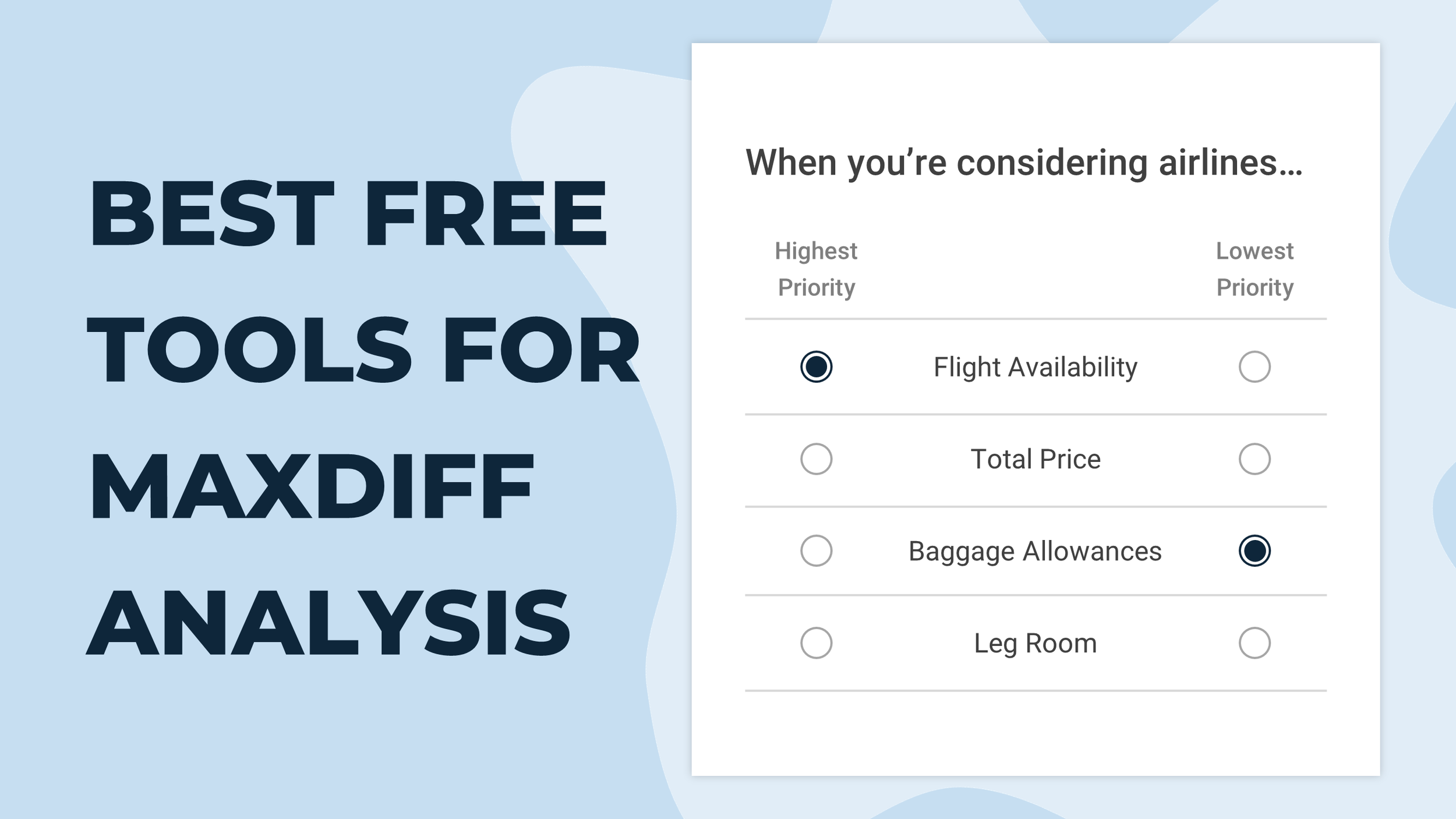
Comparing The 9 Best Survey Tools For MaxDiff Analysis
MaxDiff is usually seen as an advanced research method, so the majority of products offering MaxDiff are very expensive. This list includes free options, Enterprise versions, and more.
![7 Problem Statement Brainstorming Methods [with Examples]](https://images.squarespace-cdn.com/content/v1/5e22fb8d8524a16d5bd5683c/1688647330778-06OZMLRFIJCYRUX6V2YX/7+Methods+for+Brainstorming+Problem+Statements+for+User+Research+Product+Management+Surveys+Customer+Discovery.png)
7 Problem Statement Brainstorming Methods [with Examples]
Struggling to think of customer problems? 7 techniques to brainstorm a fuller list, from reframing outcomes to solo storming, each with a worked example.

The Problem With Customer Problems In B2B SaaS
Your product solves a handful of pains, not thousands. Why B2B SaaS teams should stop chasing every customer problem, with three principles from April Dunford.

7 Group Voting Methods For Ranking Any List of Ideas
Turn a messy list of ideas into a clear order. Seven ranking methods, from pairwise comparison to MaxDiff, with the scenarios that decide which one to use.
![[Survey Guide] How To Rank Any List Of Images or Pictures](https://images.squarespace-cdn.com/content/v1/5e22fb8d8524a16d5bd5683c/1687425769612-DW28TZ2755YXKAZ7WFUW/Image+Ranking.png)
[Survey Guide] How To Rank Any List Of Images or Pictures
Google Forms, SurveyMonkey and Typeform can't rank images. The fix is pairwise ranking, and OpinionX is the only free image ranking tool that does it.

A Simple Method For Ranking A Long List of Options
Ranking a list of 5 options is easy. There’s an endless number of survey tools you can find online for it. But what should you use when you’re trying to rank a list that’s longer than 10 options? Or 100+ options?
![Constant Sum Survey Method [Explanation & Real Examples]](https://images.squarespace-cdn.com/content/v1/5e22fb8d8524a16d5bd5683c/1685026193782-4T2LPR202ZADMEEIN93E/Constant+Sum.png)
Constant Sum Survey Method [Explanation & Real Examples]
A Constant Sum question gave Google Docs' team one clear number (89% of points on formatting) and pointed them at their biggest problem. Here's how the method works.
![Points Allocation Survey Method [Explanation & Real Examples]](https://images.squarespace-cdn.com/content/v1/5e22fb8d8524a16d5bd5683c/1685017640184-66UPUN456ZRBBKPVOE7B/Points+Allocation+Guide.png)
Points Allocation Survey Method [Explanation & Real Examples]
Points Allocation (aka Constant Sum) is a survey question where respondents allocate a budget of points amongst a set of options according to their personal preferences. Here’s an example of a Points Allocation question…
How To Validate New Product Ideas (A Data-Driven Guide)
Validating a product idea isn't about your idea, it's about finding a high-priority problem to solve. The 3-step Discovery Sandwich for product teams.

7 Types of Ranking Exercises For Focus Groups (Online & Offline)
Turn focus group discussion into countable data. Four online ranking methods and three sticky-note ones, with the design principles that make each one work.
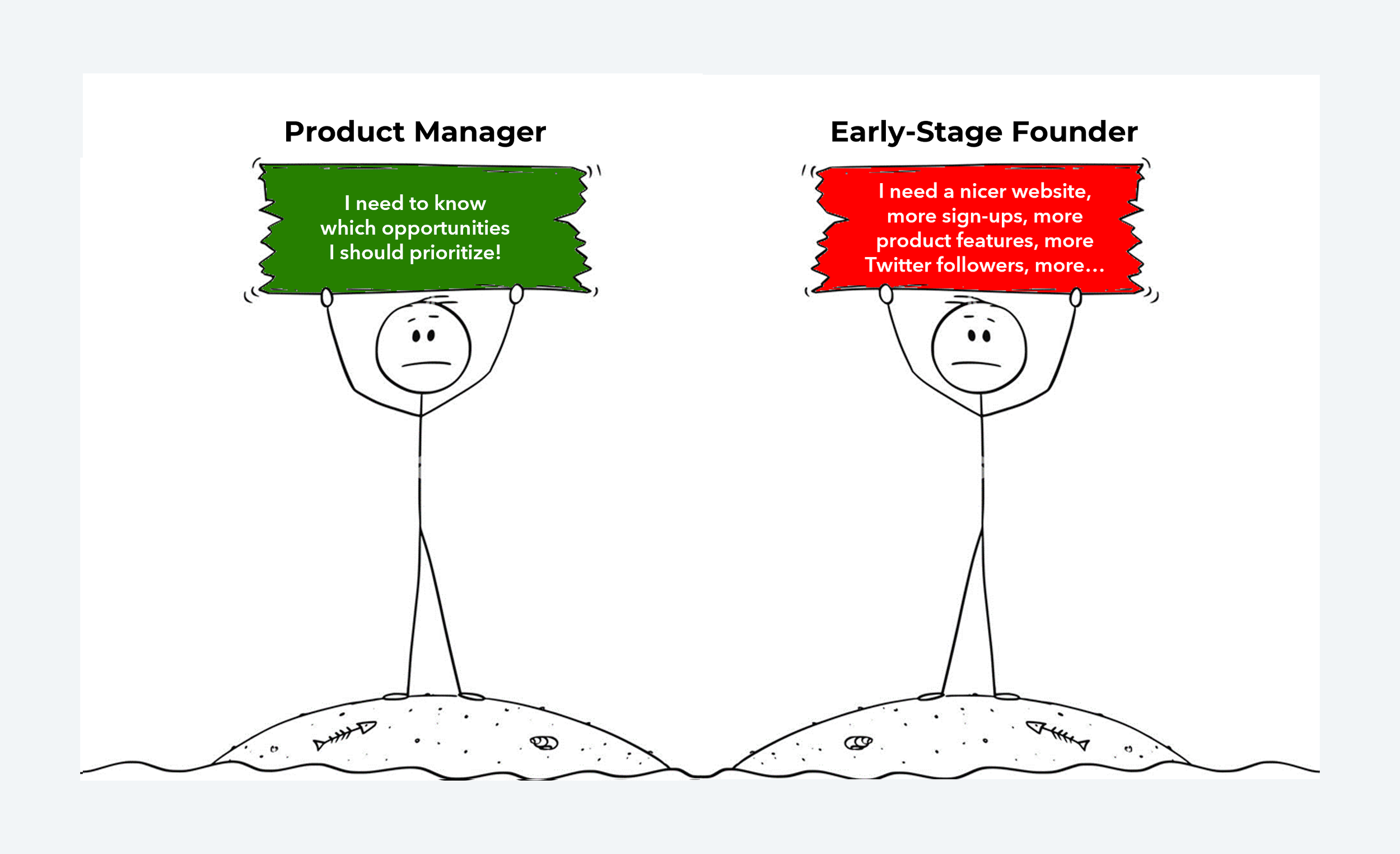
The Opportunity Signal: How to Pick the Right Customer Segment
The best customer segment is the one already searching for what you do. How a viral Reddit post taught OpinionX to spot it.

North Star Seduction: Why Startups Are Shunning Metrics-Led Product Strategies
Medium chased a "Total Time Reading" North Star Metric into clickbait and ads. Substack skipped it and won. What that teaches us about metrics-led strategy.