
Central Tendency Bias in Surveys (And How To Avoid It)
“Central tendency bias is when survey participants keep selecting the middle option on rating scales or matrix grid questions, instead of the high or low ends. Aggregate those votes with genuine ones and everything drags toward a neutral middle that hides what people actually care about. It’s a form of straightlining, and it comes from both human psychology (social desirability, uncertainty, cultural norms, indifference) and survey design (grid overload, vague wording, long scales, missing “N/A” options).”
This bias is baked into rating scales and matrix grids, so you can't reliably reword it away. The dependable fix is to switch to methods that force a comparison and show real priorities: ranked choice voting, pairwise comparison, MaxDiff, and conjoint analysis. Matrix questions have already fallen from 43% of online surveys in 2015 to 23% by 2024, partly for this reason.
What is central tendency bias?
Central tendency bias is when participants keep selecting the middle option on a rating scale or matrix grid question. Averaged in with genuine votes, it drags results toward a neutral middle that hides what people actually care about.
Most articles push surface fixes: rewording questions, adjusting scale labels, or deleting the straightlined data afterward. They rarely name the real problem, which is that some formats encourage it and nothing you do reliably prevents it.
There are question types that make this kind of straightlining impossible, and most people just don't know about them!

What causes central tendency bias?
Central tendency bias is often a form of straightlining, and it doesn't come from a single cause. It's a mix of human psychology and survey design.
Psychological Factors
Social desirability → not wanting to seem too negative, too enthusiastic, or too opinionated.
Uncertainty → when someone doesn't feel qualified to judge, the middle feels safest.
Cultural norms → some cultures value moderation and discourage extreme answers.
Indifference → disengaged participants who want to finish fast take the easy route.

Survey Design Factors
Grid overload → big matrix grids raise the mental load and tire people out.
Ambiguity → vague or abstract wording pushes people to neutral "safe" answers.
Scale length → the longer the scale, the less willing people are to pick the extremes.
Added friction → when an extreme answer triggers a follow-up question, the middle becomes an easy way to dodge extra work.
Irrelevance → with no "Not applicable" option, the middle stands in for "I don't know."
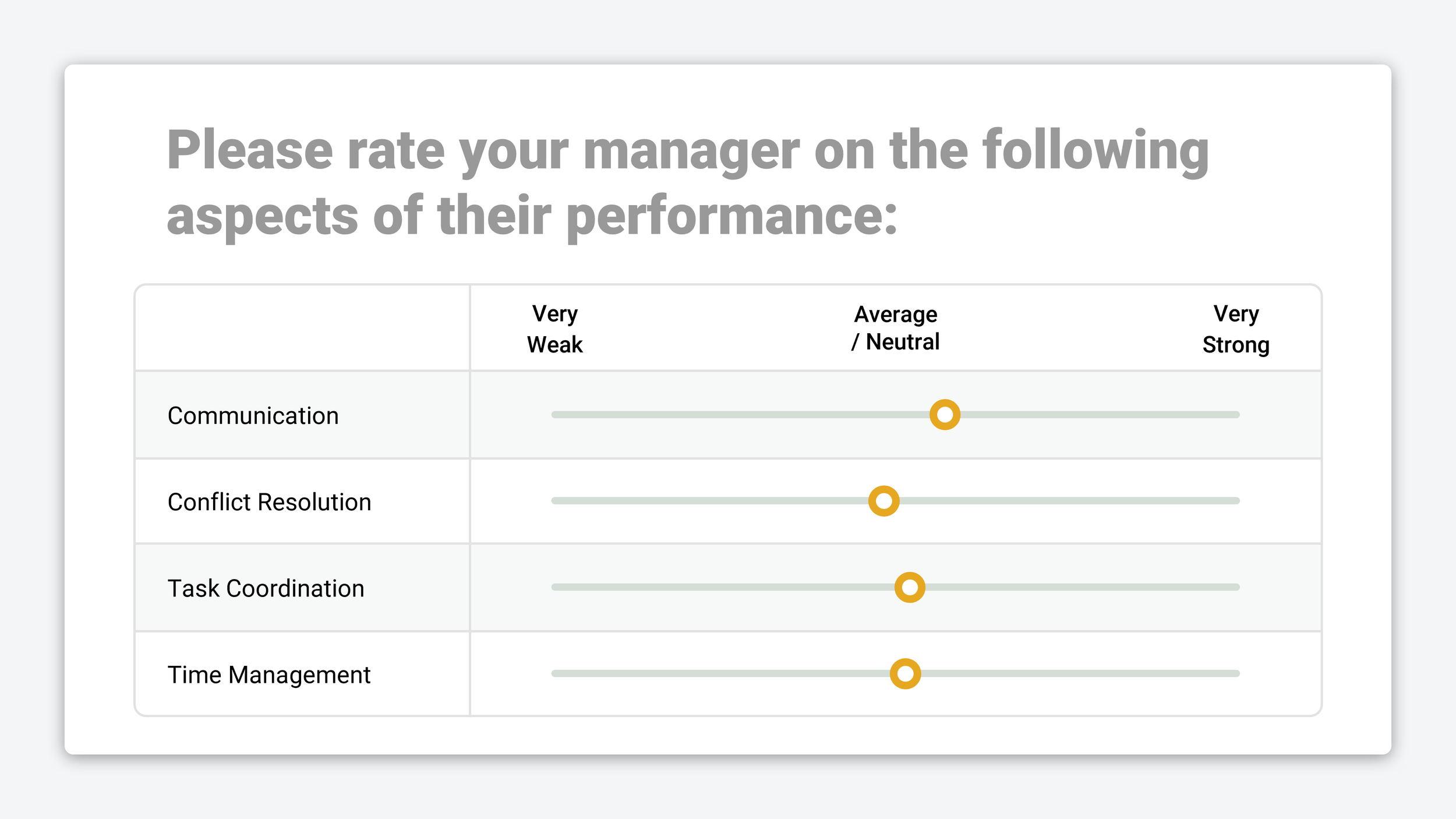
You can ease some of these with clearer wording or a better layout. But most are structural, built into rating scales and matrix grids themselves.
So you can't reliably design the bias away. The dependable fix is to drop formats that enable straightlining and use methods that force comparisons and show real priorities.
Why are researchers abandoning matrix grids?
Matrix grid use has been sliding for years: 43% of online surveys included matrix questions in 2015, down to 23% by 2024, according to SurveyMonkey's State of Surveys report.

It tracks with how people take surveys now. In 2025, 67% of OpinionX surveys were taken on mobile, where matrix grids are hard to use on a phone. Scrolling and pinching to answer adds friction and fatigue, which raises the bias and hurts your data.
Matrix grids look efficient to the researcher. For the participant they mean lower engagement and more errors, and they hand you results that look clean but miss what people actually prefer.
Which survey methods eliminate central tendency bias?
You won't tweak your way out of this by editing question formats. You need methods built around how people actually make decisions.
Three criteria matter when you're replacing a rating scale or matrix grid:
Good mobile usability → participants shouldn't have to pinch, zoom, or scroll around just to understand the question.
Preferences need comparison → you only get real insight when participants have to compare options and choose between them.
One question per screen → giving people one demanding task at a time improves response quality, especially for low-motivation or low-attention participants.
Here's how the four methods stack up on those criteria:
| Method | Mobile usability | Forces comparison | One question per screen | Stops central tendency bias because |
|---|---|---|---|---|
| Ranked Choice Voting | 🟡 Good | 🟢 Yes | 🔴 Shows the full list | There's no middle option to hide in; every item gets a rank |
| Pairwise Comparison | 🟢 Excellent | 🟢 Yes | 🟢 One pair at a time | A head-to-head choice has no neutral answer |
| MaxDiff Analysis | 🟢 Excellent | 🟢 Yes | 🟢 3 to 6 items per set | Picking best and worst forces a spread across the list |
| Conjoint Analysis | 🟢 Excellent | 🟢 Yes | 🟢 One profile choice at a time | Trade-offs between categories rule out a "neutral" pick |
Swapping a rating scale for one of these methods and want a hand setting it up? Book a free 30-minute call and a research expert will help you pick the right question type and build it with you, no cost, no obligation.
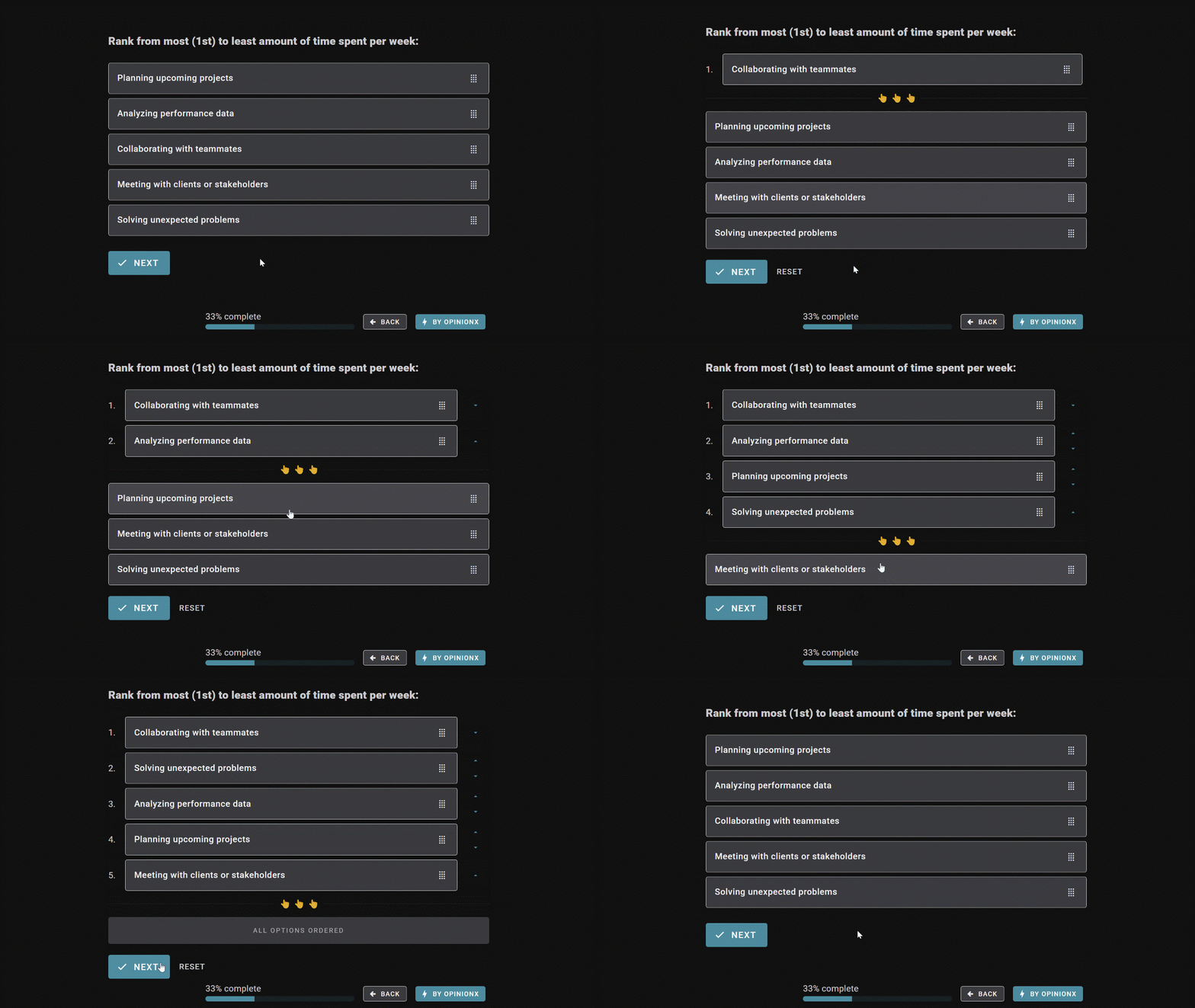
Ranked Choice Voting example from OpinionX
1. Ranked choice voting 🥇🥈🥉
Ranked choice voting shows participants a list of options and asks them to rank it, highest to lowest.
It doesn't quite meet the "one question per screen" test, but it works best for short lists of 3 to 10 items anyway. It forces an explicit comparison, so there's no middle option to hide in the way there is on a rating scale or matrix grid.
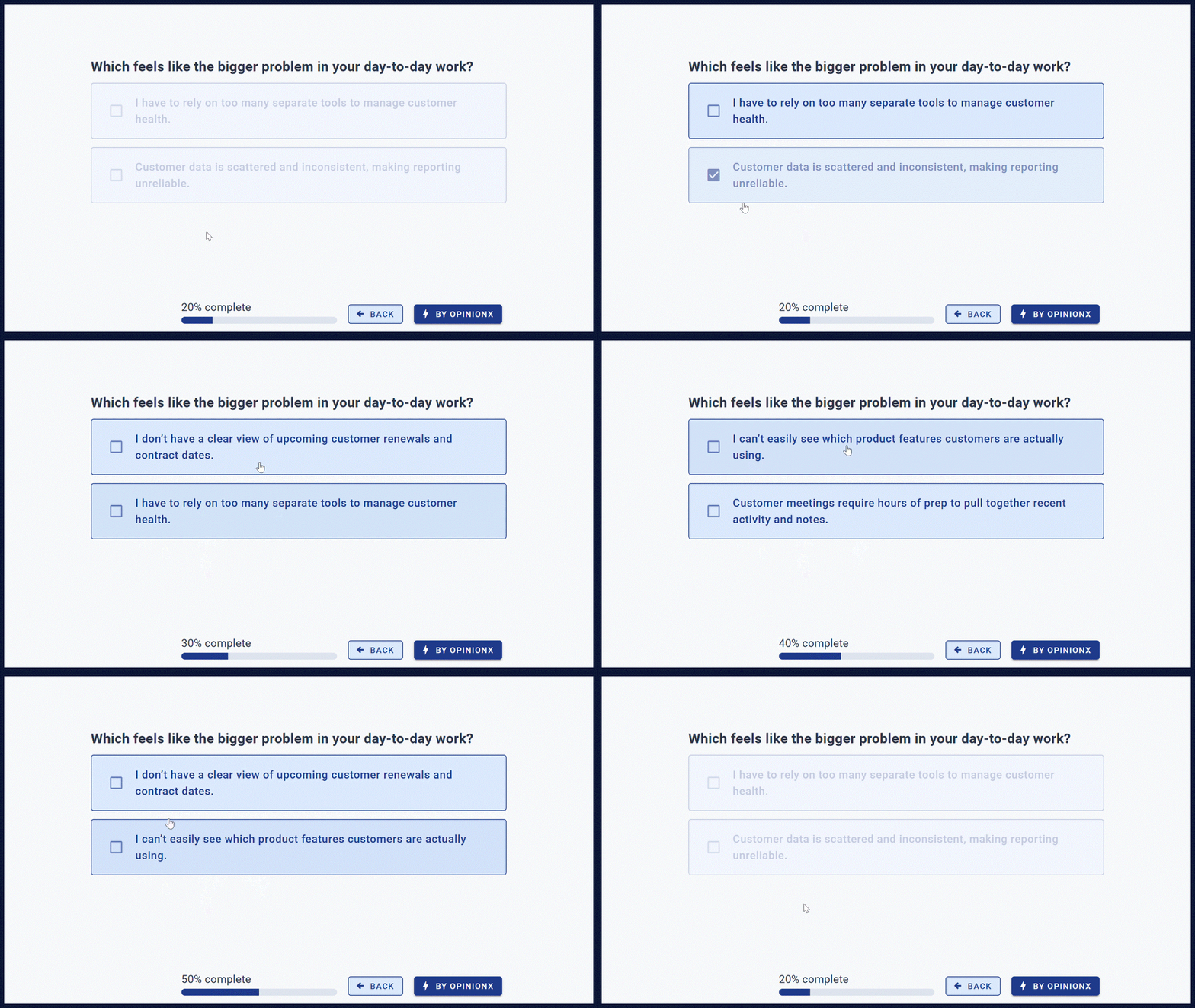
Pairwise comparison survey example from OpinionX
2. Pairwise comparison 🆚
In pairwise comparison, participants get a series of head-to-head choices, drawn at random from your full list.
It's a flexible method. Depending on how you frame the question, it can measure relative preference, importance, satisfaction, or concern. It also hits all three criteria: it forces comparison, each choice is simple, and it works well on phones.
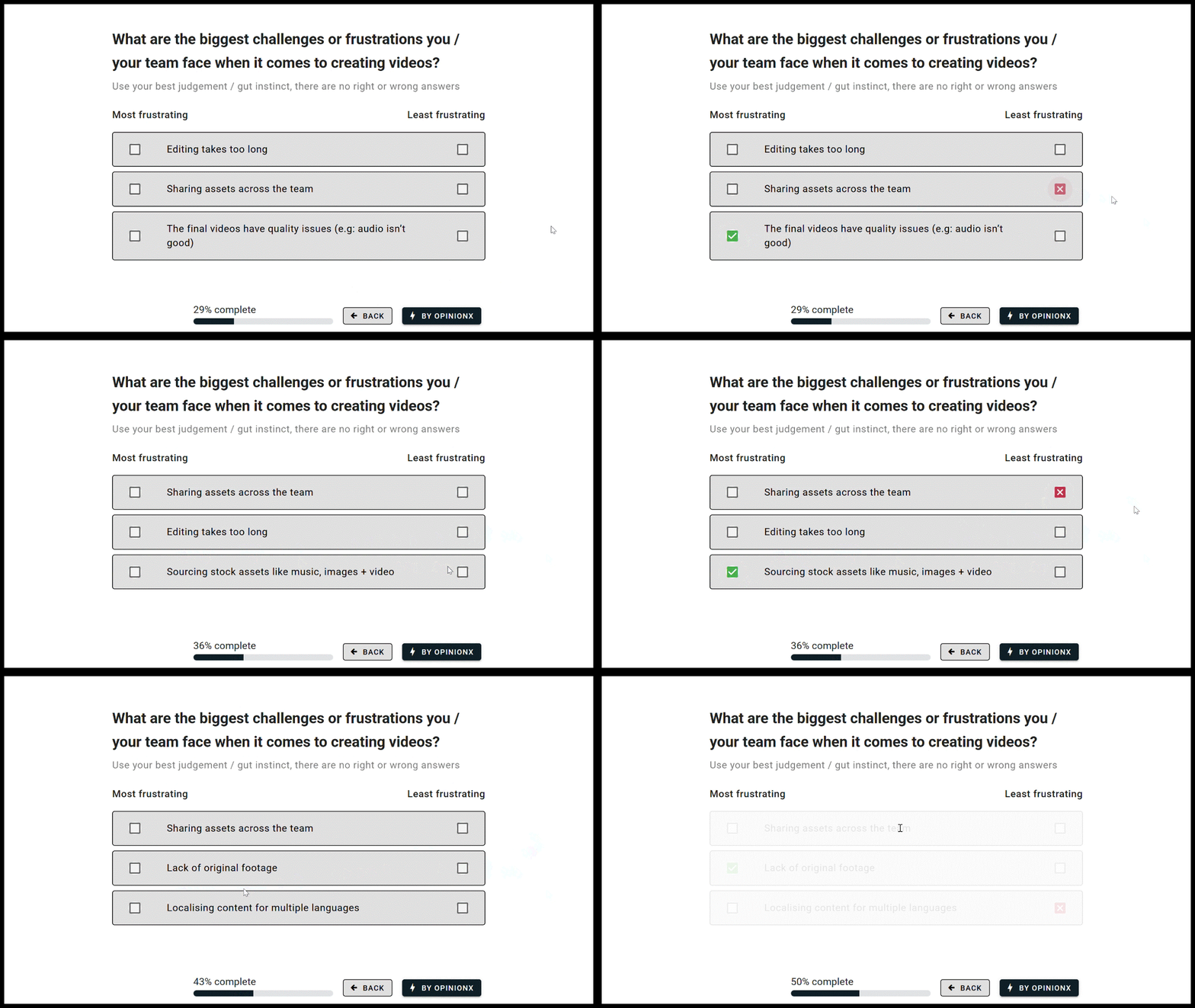
MaxDiff survey example from OpinionX
3. MaxDiff analysis ⬆️/⬇️
MaxDiff, also called best-worst scaling, shows participants 3 to 6 options at a time across a series of sets and asks for the best and worst in each. Like pairwise, the sets are drawn at random from your full list.
It's a choice-based method too, and you can adapt it to most/least important, highest/lowest priority, and similar. Matrix grid use has nearly halved since 2015. Interest in MaxDiff is climbing: Google searches for it are 526% higher now than in 2015.
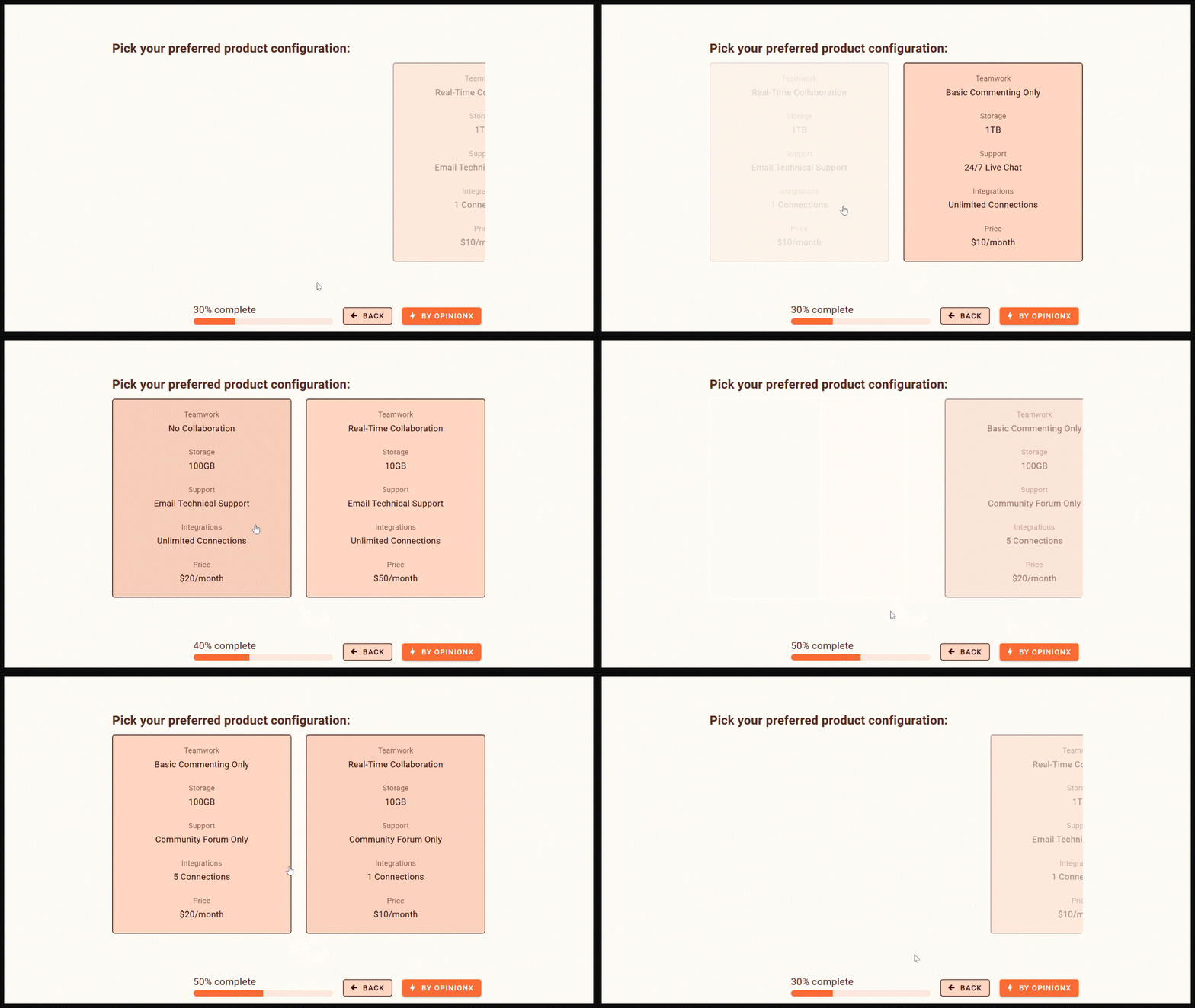
Conjoint survey example from OpinionX
4. Conjoint analysis 📋
Conjoint analysis, a type of discrete choice experiment, is for cases where options belong to different categories and you have to weigh them together.
For example, someone choosing a streaming service weighs a few factors at once:
Brand: Netflix, Disney+, HBO…
Price: $11.99/month, $17.99/month, $18.49/month…
Features: ads, resolution, seats, downloadable content…
It measures which categories matter most (price vs brand, say) and which options win inside each category (Netflix vs Disney+).
Conjoint answers research questions like:
Which features are perceived as most valuable?
How sensitive are customers to price changes?
Which combination of features is most appealing?
What product configuration would outperform competitors?
That's why conjoint suits product and pricing research so well: teams can run zero-fidelity experiments and test new combinations before building anything.
If you're weighing these four methods against each other, this guide to picking a survey ranking method walks through the choice in four questions.
Frequently asked questions
What is central tendency bias? It's when survey participants keep selecting the middle option on a rating scale or matrix grid instead of the high or low ends. Averaged in with real votes, it flattens results toward a neutral middle that hides what people actually prefer.
What causes central tendency bias? Two sets of causes. Psychological ones include social desirability, uncertainty, cultural norms, and indifference. Design ones include large grids, vague wording, long scales, hidden follow-up questions, and no "N/A" option. Rating scales and matrix grids make all of them worse.
Is it the same as straightlining? It's a specific form of it. Straightlining is giving the same answer to every item in a list; the central tendency version is that same behaviour on the middle option in particular.
How do you avoid central tendency bias? Rewording questions rarely fixes it, because the bias is built into the format. The reliable fix is to switch to methods that force a choice: ranked choice voting, pairwise comparison, MaxDiff, or conjoint analysis.
Why do rating scales cause this bias? They let people rate every item in isolation, so a neutral middle answer is always available. Methods that force comparison remove that escape route and make participants reveal what they actually prioritise.
These methods used to be locked away ✨
Pairwise comparison and MaxDiff used to count as "advanced market research," locked away from most researchers in expensive, complicated platforms. Not any more.
OpinionX makes these methods easy to use and mobile-friendly. Hundreds of product teams use it to measure user needs, map customer segments, and model real purchase decisions.
Move past rating scales and matrix grids with methods that give you cleaner data and an easier survey for participants:
Every method in this guide is free on OpinionX.
Did you enjoy this post? Over 42,000 Product Managers, UX Researchers, and Startup Founders subscribe to our newsletter The Full-Stack Researcher for actionable user research advice.
About The Author:
Daniel Kyne is the Founder & CEO of OpinionX, the platform for advanced market research surveys. Hundreds of the world’s top product teams use OpinionX to measure their customers needs, map customer segments, and model purchase decisions — all in one easy-to-use survey platform.
→ Try OpinionX for free today