
4 Ways to Avoid Matrix Grid Survey Straightlining (With Examples)
“Survey straightlining is when a participant gives the same answer to every item in a matrix or grid question, which leaves you with weak data. People usually blame lazy or fraudulent participants, but that misses most of what’s going on.”
It has four causes: fraud (invalid, exclude it), fatigue (fixable with shorter, clearer surveys), irrelevance (often a rational answer to items that don't apply), and unrestricted voting (the predictable result of a design that never forces a trade-off). A 2020 study in Survey Research Methods found genuine straightlined answers made up as much as 22% of responses in some surveys, and that deleting them biased regression coefficients by 13% to 39%.
Matrix questions have fallen from 43% of online surveys in 2015 to 19% by 2020, partly because they straightline and partly because they're painful on mobile. Better wording won't fix that. The fix is a question type that forces comparison and shows one question at a time: ranked choice voting, pairwise comparison, MaxDiff, and conjoint analysis.
What is survey straightlining?
Survey straightlining is when a participant gives the same rating or answer to every item in a matrix or grid question, which makes the data far less useful.
Most guides I could find blame the participant, and they've got it wrong. They keep repeating the same flawed explanation instead of looking at what actually causes it.
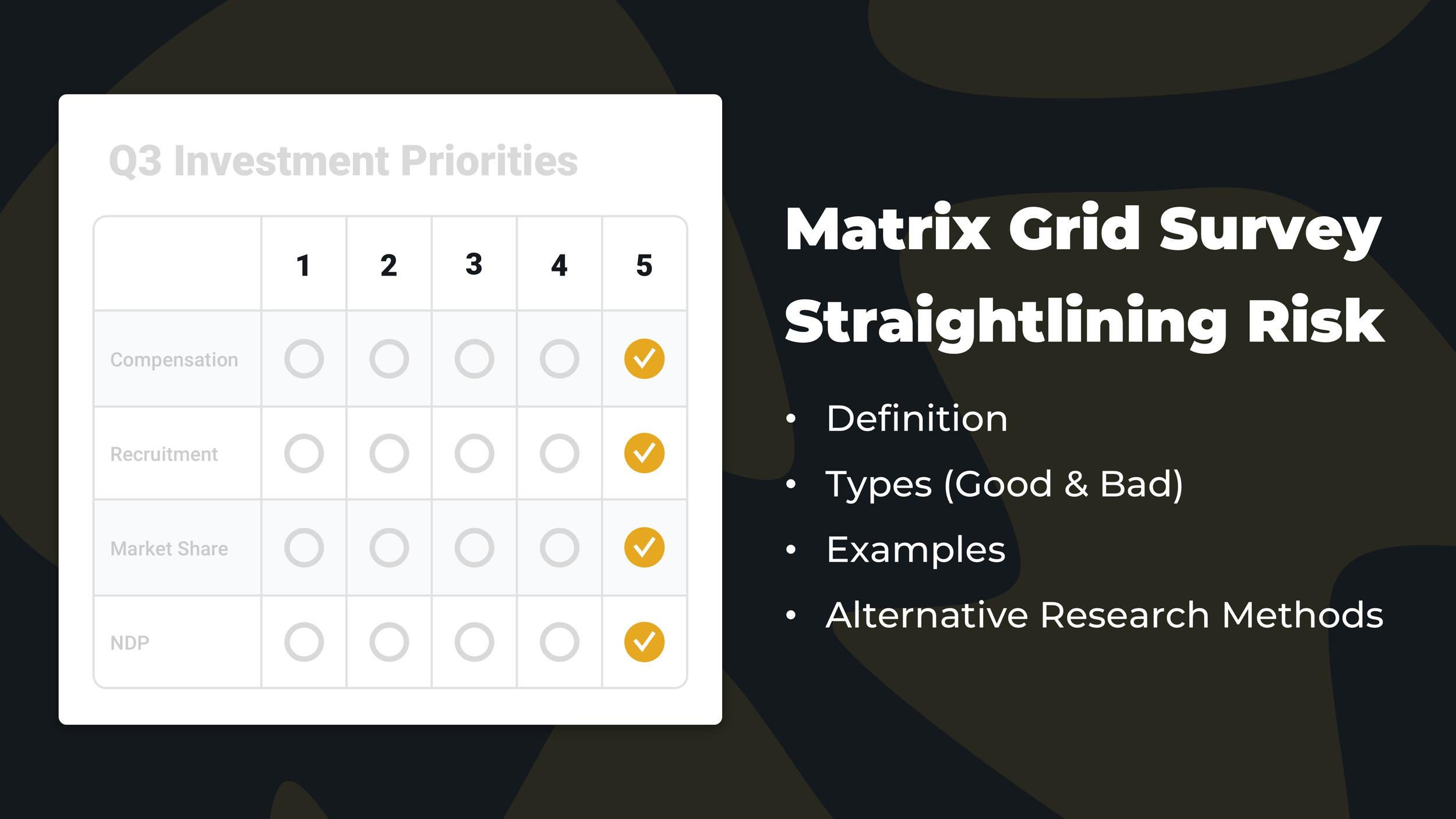
What do most guides get wrong about straightlining?
Open almost any guide on straightlining and you'll see the same claim: lazy participants.
Qualtrics claims that "straightlining happens when your respondents rush through your survey clicking on the same response every time … because they're bored, don't have the mental energy, or they find the survey too complex and demanding."
DriveResearch agrees that "straightlining is a dead giveaway that the respondent is uninterested in the survey, in a time crunch, or lacking the mental energy to take a survey."
The Research Society repeats this theme, suggesting straightlining happens when "people become lazy or hasty in their responding, just to get it over with."
Ironically, the laziest thing here is repeating the same wrong explanation.
Straightlining shows up for lots of reasons, and plenty of them are legitimate participants answering honestly. Poor survey design causes it far more often than laziness does.
I wrote this to correct the record. There are four distinct types, and most researchers miss #3 and especially #4.
What are the four types of survey straightlining?
Some of these are junk you should drop. Others are valid answers that get deleted anyway, because people misunderstand what straightlining is.

#1. Fraudulent ⚠️
This is bots, paid cheaters, or disengaged participants who pick the same answer across every item in a grid to finish fast, ignoring the content.
These responses damage your data. You can usually spot them by two things together: identical answers (say, "3/5" for every option) and implausibly fast completion times (under 2 seconds a question).
Note: the screenshot above could also be an example of central tendency bias, a different form of straightlining where participants avoid the high and low ends of a scale and cluster on the middle option for their own set of reasons.

#2. Fatigue 💤
Fatigue straightlining comes from legitimate participants who start engaged and run out of energy partway through, switching from real answers to straightlined ones.
It shows up most in long, wordy, or glitchy surveys. You can cut it with clearer progress bars, better incentives, shorter surveys, plainer language, or a cleaner design that lowers the mental load.

#3. Irrelevant 🤷
When you ask participants to rate items that don't apply to them, straightlining is a rational answer. You'll see the same option picked down the whole list: "N/A," "Never," or "Neither agree nor disagree."
A 2020 paper published in Survey Research Methods found that these genuine straightlined responses accounted for up to 22% of answers in some surveys, and that removing them introduced negative bias in regression coefficients of 13% to 39%. That's a hard counter to the idea that straightlining always means lazy participants.
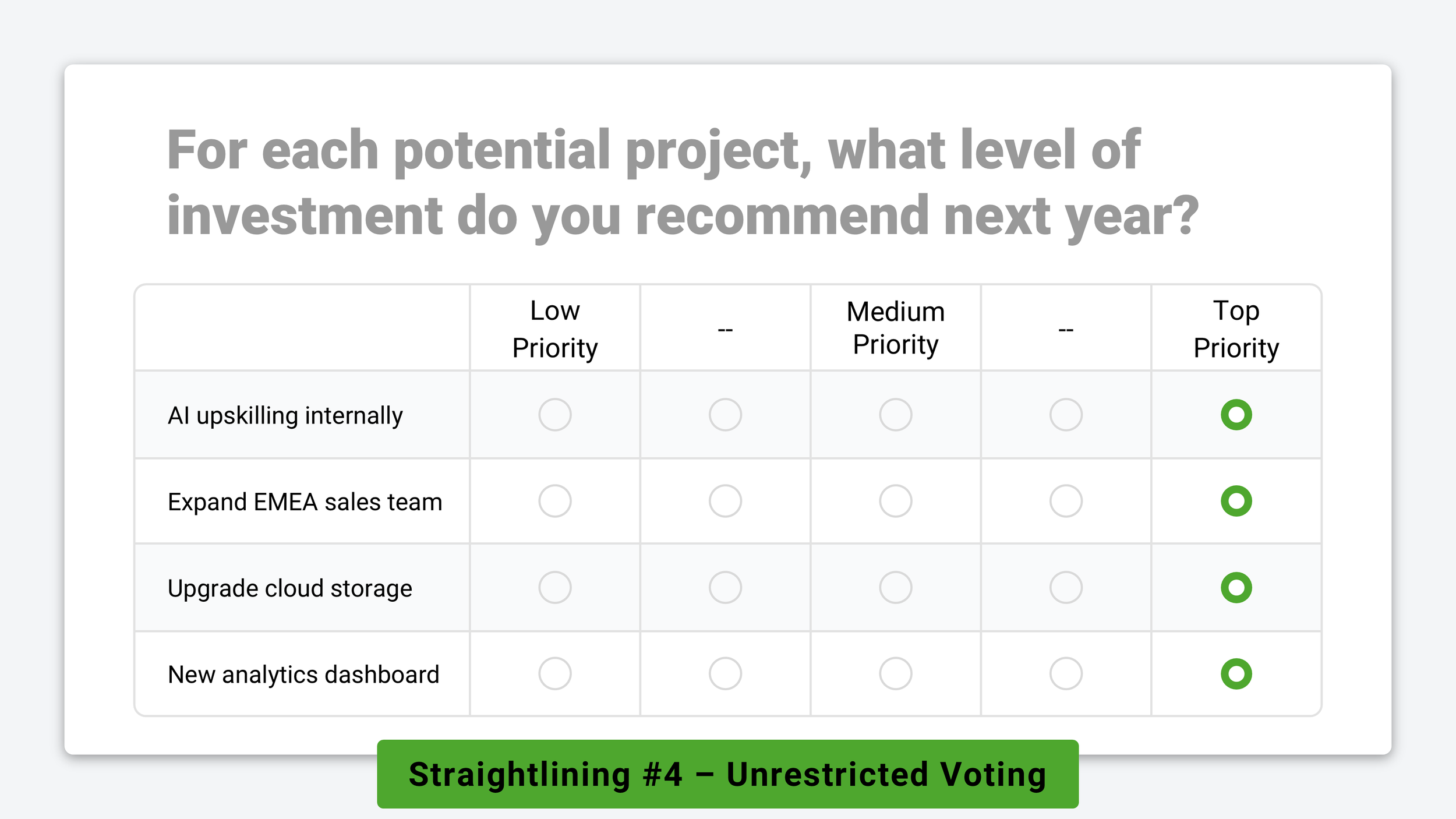
#4. Unrestricted 🤑
When you don't force participants to weigh trade-offs or compare options head to head, straightlining is the natural result.
For example:
An HR survey asking employees to pick their non-salary benefits
User research where customers vote on a list of problem statements
A strategic planning survey where managers mark their investment priorities
In each case, a participant can reasonably mark every option as a "top priority." This is the type researchers miss most, and it has nothing to do with fraud, fatigue, or irrelevance. It comes from the survey design itself.
Likert scales, voting grids, and matrix questions measure each option on its own. But people live with limited budgets, time, and staff, and those limits force trade-offs. When a survey ignores them, straightlining is just how participants vote.
Why are researchers moving away from matrix grid questions?
43% of online surveys in 2015 included matrix questions. By 2020, that figure had fallen to 19% and has barely changed since, according to SurveyMonkey's State of Surveys report.

Part of the answer is straightlining. But the bigger issue is usability.
In 2025, 67% of OpinionX surveys were taken on mobile, and matrix questions are hard to answer on a phone. When two-thirds of your participants have to scroll, pinch, and zoom to answer one question, straightlining gets worse.
Matrix questions feel efficient to build. They just push the cost onto the participant, who hits more friction and gives you worse data.
Which survey methods avoid matrix grid straightlining?
Three criteria matter when you're choosing an alternative to matrix grid questions:
Good mobile usability → participants shouldn't have to pinch, zoom, or scroll around just to read a question and vote.
Preferences need comparison → to measure what actually matters, participants have to compare options, weigh trade-offs, and make a call.
One question per screen → giving people one demanding task at a time improves response quality, especially those with low ability or motivation.
Here's how the four methods stack up on those three criteria:
| Method | Mobile usability | Forces comparison | One question per screen | Best for |
|---|---|---|---|---|
| Ranked Choice Voting | 🟡 Good | 🟢 Yes | 🔴 Shows the full list | Short lists of 3 to 10 items |
| Pairwise Comparison | 🟢 Excellent | 🟢 Yes | 🟢 One pair at a time | Relative preference, importance, satisfaction or concern across any list |
| MaxDiff Analysis | 🟢 Excellent | 🟢 Yes | 🟢 3 to 6 items per set | Most and least important across a longer list |
| Conjoint Analysis | 🟢 Excellent | 🟢 Yes | 🟢 One profile choice at a time | Options that span categories, like price vs brand vs features |
Not sure which of these methods fits the decision you're trying to measure? Book a free 30-minute setup call and a research expert will help you pick the right question type and set it up with you, no cost, no obligation.
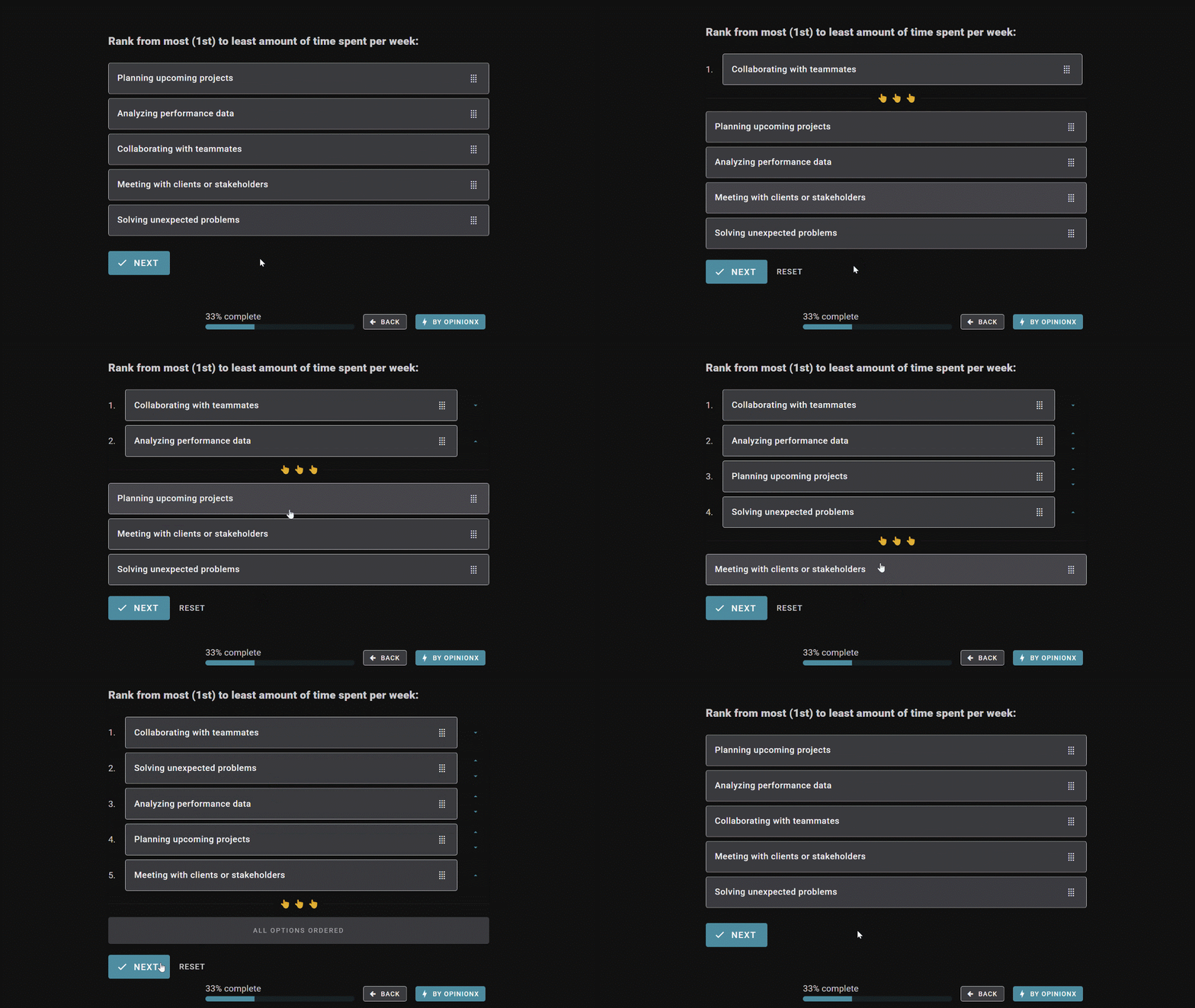
Ranked Choice Voting example from OpinionX
1. Ranked choice voting 🥇🥈🥉
Ranked choice voting shows participants a list of options and asks them to rank it, highest to lowest.
It doesn't quite meet the "one question per screen" test, but it works best for short lists of 3 to 10 items anyway. It forces an explicit comparison, so you can't straightline it the way you can a matrix grid.
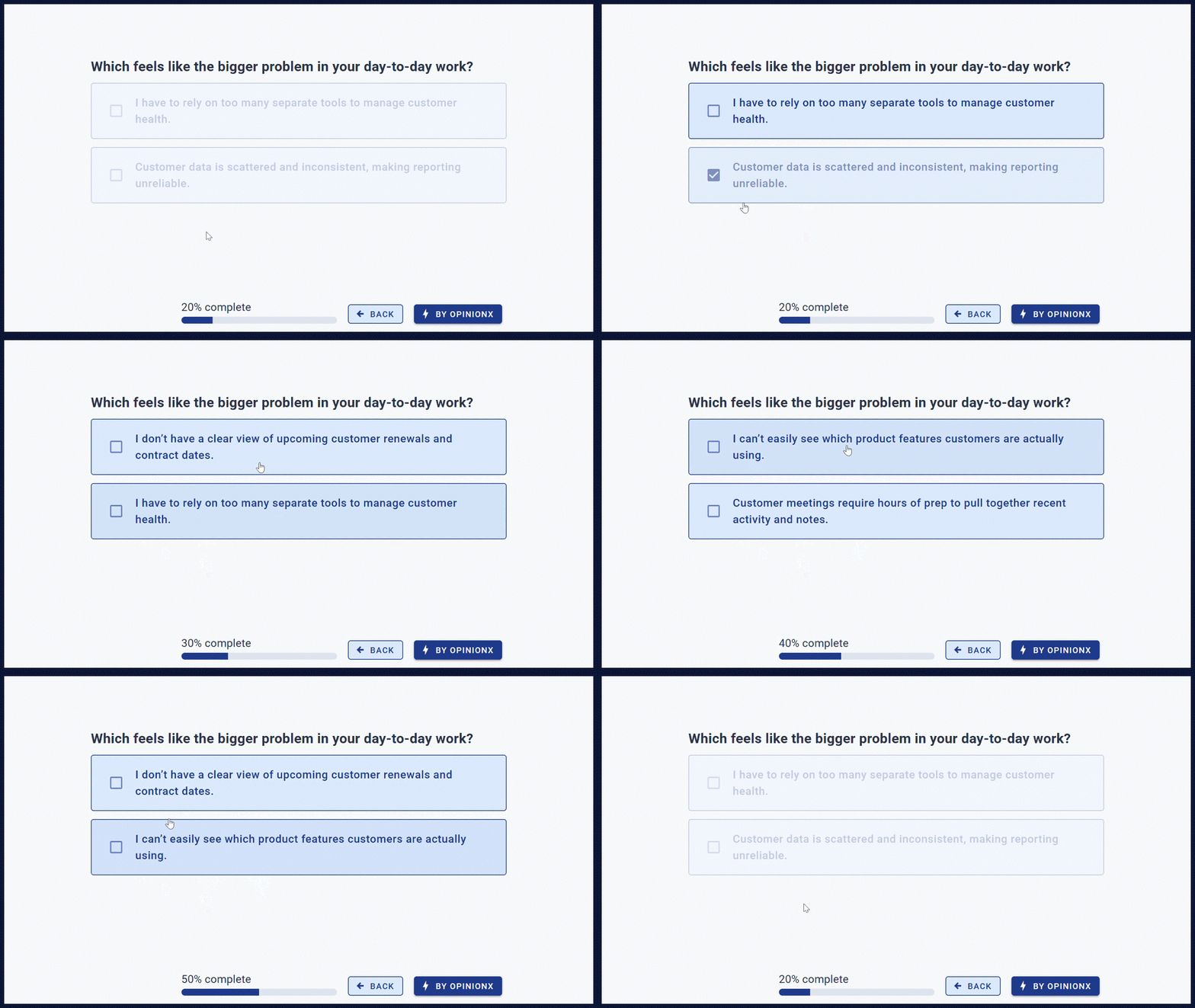
Pairwise comparison survey example from OpinionX
2. Pairwise comparison 🆚
In pairwise comparison, participants get a series of head-to-head choices, drawn at random from your full list.
It's a flexible method. Depending on how you frame the question, it can measure relative preference, importance, satisfaction, or concern. It also hits all three criteria: it forces comparison, each choice is simple, and it works well on phones.
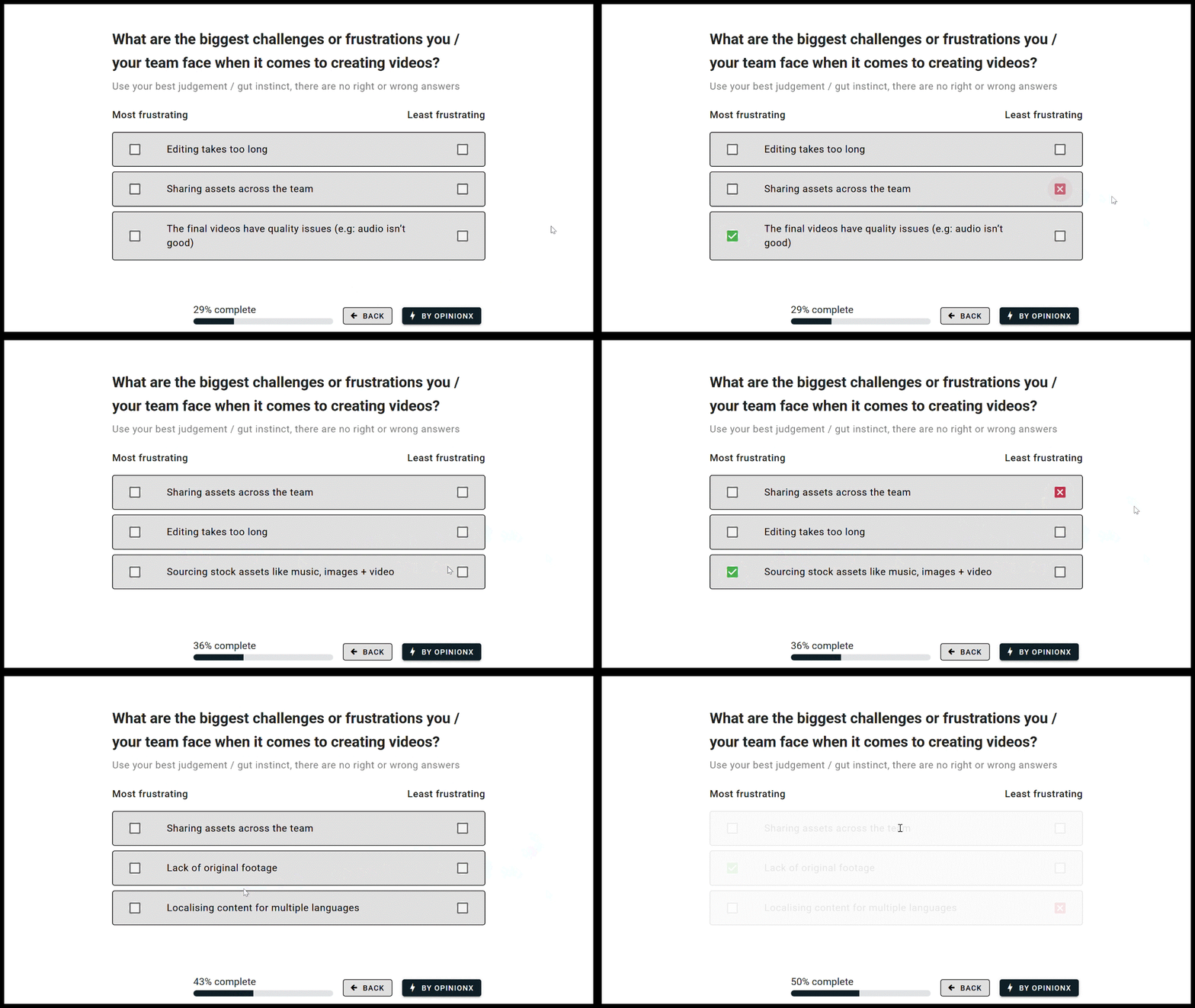
MaxDiff survey example from OpinionX
3. MaxDiff analysis ⬆️/⬇️
MaxDiff, also called best-worst scaling, shows participants 3 to 6 options at a time across a series of sets and asks for the best and worst in each. Like pairwise, the sets are drawn at random from your full list.
It's a choice-based method too, and you can adapt it to most/least important, highest/lowest priority, and similar. Matrix grid use has dropped 56% since 2015. Interest in MaxDiff is climbing: Google searches for it are 526% higher now than in 2015.
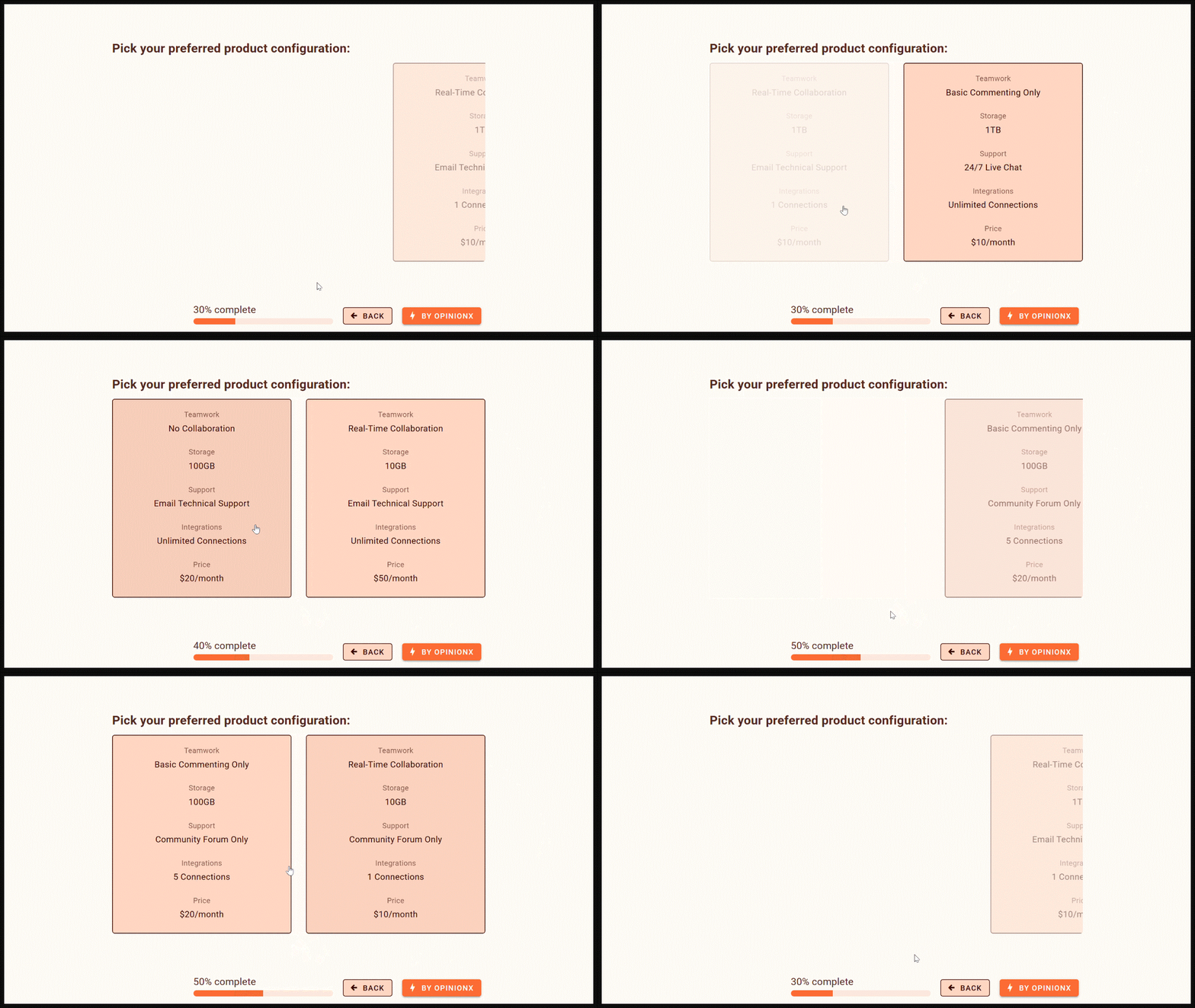
Conjoint survey example from OpinionX
4. Conjoint analysis 📋
Conjoint analysis, a type of discrete choice experiment, is for cases where options belong to different categories and you have to weigh them together.
For example, someone choosing a streaming service weighs a few factors at once:
Brand: Netflix, Disney+, HBO…
Price: $11.99/month, $17.99/month, $18.49/month…
Features: ads, resolution, seats, downloadable content…
It measures which categories matter most (price vs brand, say) and which options win inside each category (Netflix vs Disney+).
Conjoint answers research questions like:
Which features are perceived as most valuable?
How sensitive are customers to price changes?
Which combination of features is most appealing?
What product configuration would outperform competitors?
That's why conjoint suits product and pricing research so well: teams can run zero-fidelity experiments and test new combinations before building anything.
If you're weighing these four methods against each other, this guide to picking a survey ranking method walks through the choice in four questions.
These methods used to be locked away ✨
Pairwise comparison and MaxDiff used to count as "advanced market research," locked away from most researchers in expensive, complicated platforms. Not any more.
OpinionX makes these methods easy to use and mobile-friendly. Hundreds of product teams use it to measure user needs, map customer segments, and model real purchase decisions.
Get past straightlining with methods that produce cleaner data and an easier experience for participants:
Every method in this guide is free on OpinionX.
Did you enjoy this post? Over 42,000 Product Managers, UX Researchers, and Startup Founders subscribe to our newsletter The Full-Stack Researcher for actionable user research advice.
About The Author:
Daniel Kyne is the Founder & CEO of OpinionX, the platform for advanced market research surveys. Hundreds of the world’s top product teams use OpinionX to measure their customers needs, map customer segments, and model purchase decisions — all in one easy-to-use survey platform.
→ Try OpinionX for free today