
Whether you're launching a podcast, creating a brand, or just trying to get a team aligned, picking a name everyone will get behind is hard. Names are subjective, and people attach different feelings and connotations to each option you show them.
Several voting methods can rank a list of names fairly, suited to subjective options like these while giving everyone a say in the final call. This post explains each one, with interactive examples so you can see which you like best.
7 voting methods for ranking any list of names
All seven methods are free on OpinionX, where you can create unlimited surveys with unlimited ranking options and up to 25 participants each, without paying even $1. In each example below, you can see the real results of the embedded poll once you've voted.
1. Pairwise comparison
Pairwise Comparison breaks your list of names into a series of head-to-head pair votes to measure which is most preferred overall. It's the best method for ranking subjective options like potential names, which are hard to rank in one flat list.
It scores the votes automatically using win-rate analysis: the percentage of pair votes a name "won". That makes results easy to read: every name gets a score from 0-100 for how often it was picked as the preferred option (a score of 80 means it was picked as the better name in 80% of the pairs it appeared in).
2. Points allocation
Points Allocation gives each participant a set of credits to spread among the options by preference. Unlike Pairwise Comparison, which measures people's subconscious preferences, this one is a fun way to draw out their considered preferences.
Also known as "Constant Sum" surveys, it lets voters show how much they like an option by piling their limited points onto it. We don't just learn that Simon prefers apples to bananas, we see he'd give 9 of his 10 points to apples (Simon really likes apples…).
3. Ranked choice voting
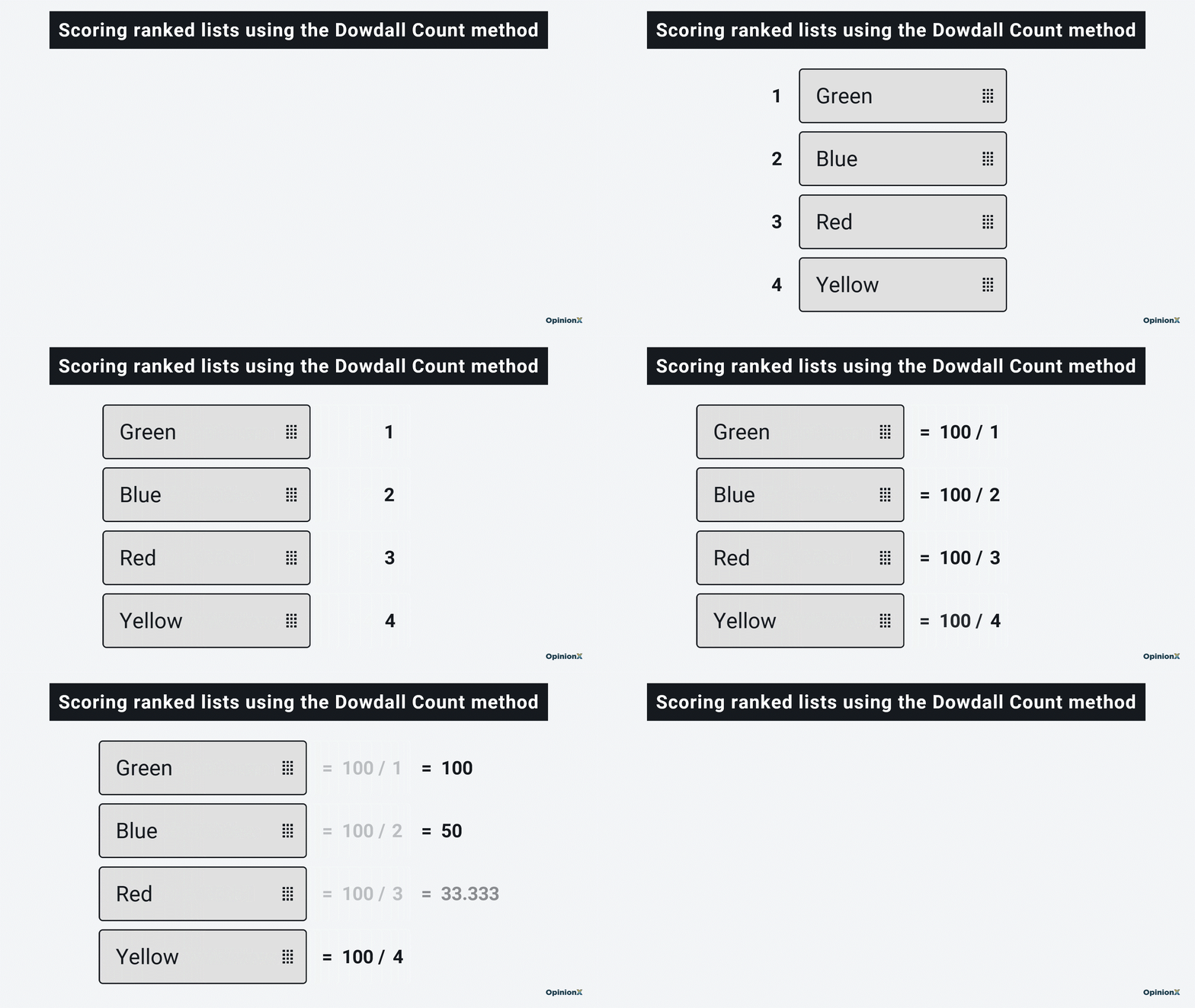
The best-known method here is Ranked Choice Voting, which shows participants the full list and asks them to put it in order of preference. It's also called Rank Ordering or Drag-and-Drop Ranking.
There are many ways to score Ranked Choice Voting results. OpinionX uses the Dowdall Method, which gives each ranked option a score of 100/rank (your 4th favourite gets 100/4 = 25 points).
I'm a big fan of the Dowdall Method for its flexibility: participants can rank only the options that matter to them and skip the rest. It also weights your favourites more heavily when turning ranks into scores, which is great for people with strong opinions. Almost all other survey tools use "Borda Count" methods, but those only work when everyone ranks the same number of options, an unnecessary limit next to the Dowdall Method.
4. Consensus poll
Consensus Polls show participants each option and ask them to agree or disagree with a stated premise, like whether the name shown would be a good fit. Names come up one at a time in a quick agree/disagree poll.
These agreement questions are non-comparative, worth knowing before you pick this method. Participants don't compare options head-to-head; you just see which name the highest percentage of people like (the largest share of "agree" votes), which is quite different from measuring which names are most strongly preferred.
5. First past the post
The most basic method is a simple one-vote poll: show the list and ask participants to pick only their favourite. It shows which option has the highest first-choice rate among participants. I'd only use this for a very short list, 2-5 at most, otherwise it misses the more complex preferences a longer list needs.
6. Image ranking
Images can help people picture the names they're voting on. You can add images to any of the methods in this post. For example, the image ranking survey below uses the Pairwise Comparison format:
7. MaxDiff analysis
MaxDiff ranks preferences by asking people to pick the best and worst option from a set of 3-6 statements. Each vote shows a new set drawn from your full list. You can relabel "best" and "worst" to fit the study: Favourite / Least Favourite, Top / Bottom, Most Preferred / Least Preferred.
About OpinionX
OpinionX is an advanced market research survey platform for product teams. Alongside simple polls like the name-ranking ones in this post, it runs the methods product managers and UX researchers rely on for bigger decisions: conjoint analysis, MaxDiff, Van Westendorp pricing, and needs-based segmentation, all with automated analysis.
Every ranking method in this post is free: unlimited surveys, unlimited ranking options, and up to 25 participants each, with no time limit or credit card. Find out which name on your list wins by creating a free ranking survey on OpinionX.