

The Full-Stack Researcher
Guides, Case Studies, & Actionable Advice for Mixed-Methods User Research

The 12 Best Tools For Creating Product/Market Fit Surveys (PMF Survey)
Microsurvey tools, general survey builders, or ranking platforms? 12 PMF survey tools compared on free tiers, branching, segmentation and price.

How To Rank Any List of Names (Methods, Examples, Tools)
Seven voting methods to rank a list of names, from pairwise comparison to MaxDiff, with interactive examples. Free to run on OpinionX.

How to use PMF Surveys to reach Product/Market Fit Faster (Guide + Case Study)
Superhuman's PMF score was 22%, below the 40% benchmark. Segmentation showed it was really 32% among the right users, and told them what to build. Here's the method.

Head-To-Head Pair Voting (Methods, Tools, Examples)
Head-to-head pairwise voting is one of the easiest ways to rank a list of options. This guide explains the best methods and most popular tools to use, along with some real examples.

Pairwise Ranking (Tools, Examples, Methods)
The Ultimate Guide To Pairwise Ranking — best methods, most popular tools, example pairwise comparison surveys, types of pair ranking, calculation formulas, and more.

Paired Comparison (Methods, Examples, Tools)
The Ultimate Guide To Paired Comparison — definition, best methods, most popular tools, example surveys, types of paired comparison, calculation formulas, and more.

Using Surveys for A/B Testing [Methods, Examples, Tools]
A website A/B test can need 200,000 users. A survey-based one needs about 29. How to run A/B tests with pairwise comparison and monadic studies.

How Labster prioritizes which user problems to solve next
Labster's UX researcher ranked customer problems with OpinionX and found the problem they expected to top the list came 17th. Here's what changed.
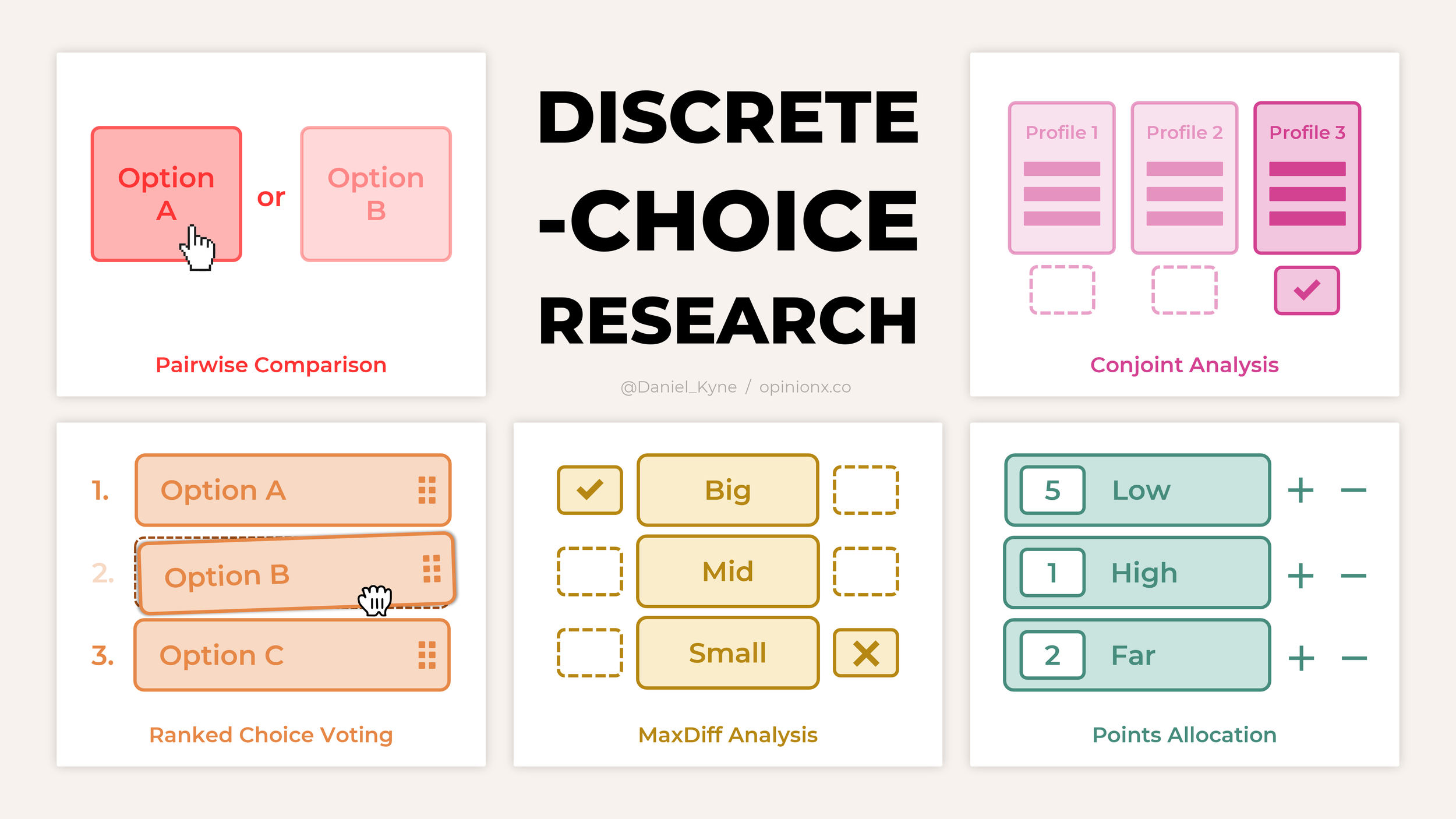
Discrete Choice Model: Survey Research & Analysis Guide
Discrete Choice Modeling is a category of research that measures the relative importance of a set of options according to a group of people, including conjoint, maxdiff, pairwise comparison, and more.

What is Psychographic Segmentation [Guide & Examples]
Psychographic customer segmentation identifies groups of customers with a similar way of thinking about a topic or issue. Including 5 research methods, 6-step process, a real B2B case study, and how to run a psychographic segmentation survey.
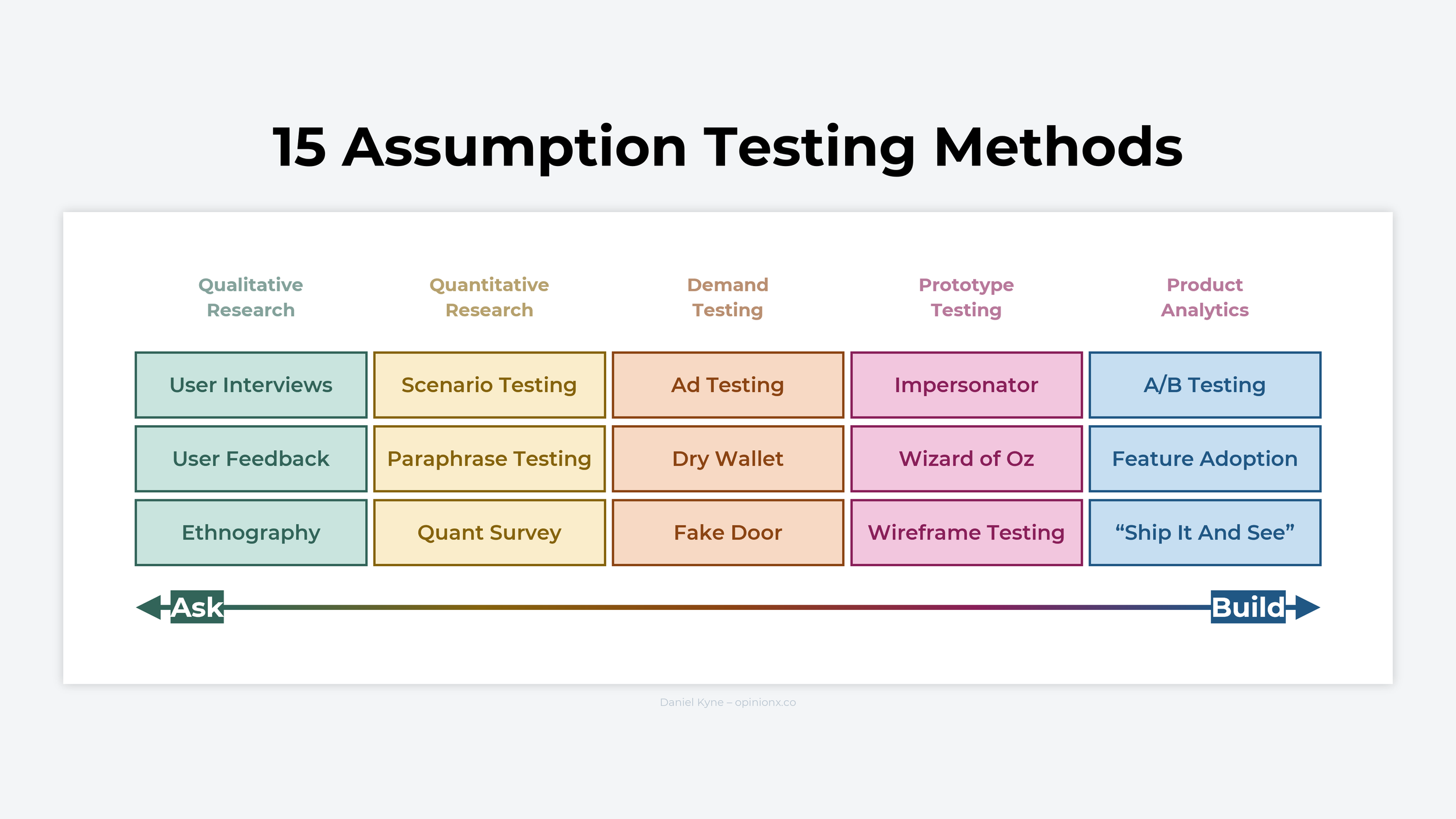
15 Assumption Testing Methods For Product Management Teams
15 ways to test the beliefs your product idea rests on, from a one-afternoon website (like DoorDash) to A/B tests. Plus how to plan and prioritise them.

Never Say Usually: How To Ask Questions In User Interviews
"Usually" questions get you the idealised version of a person. Anchor to a specific, recent moment instead. The interviewing shift, with a Netflix example.

The Most Misunderstood Research Method In All The Land
People reach for conjoint analysis thinking it measures "what matters most". It only measures that in a purchase decision. Here's what to use instead.
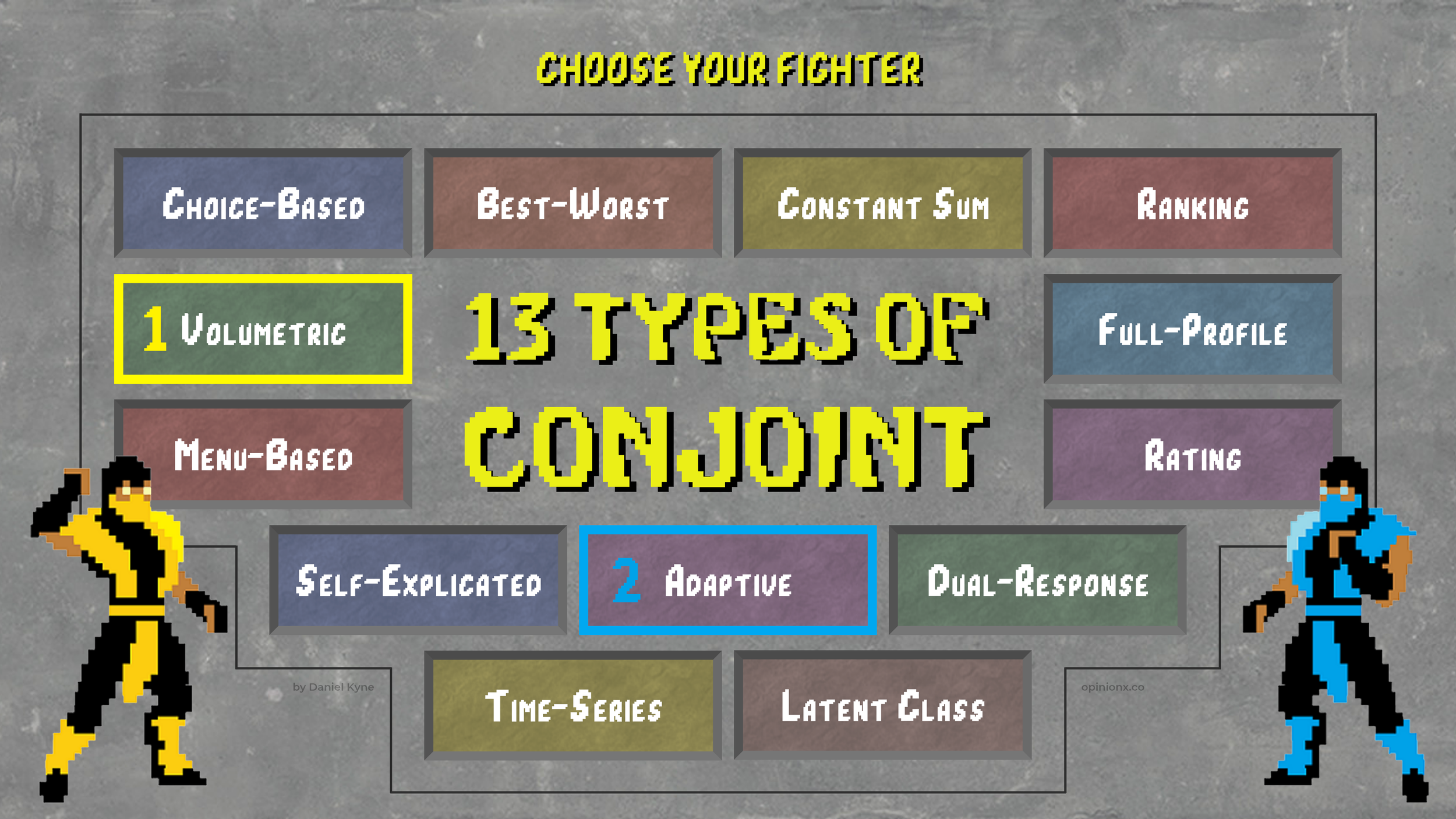
13 Types of Conjoint Analysis Explained (With Image Examples)
Explanations (with examples) for the 13 most popular conjoint analysis methods, including types like choice-based, best-worst, ranking, self-explicated, volumetric, menu-based, adaptive, and more.

8 Alternatives To Conjoint Analysis For User Research
Conjoint analysis is an advanced research method for measuring attribute importance in a product mix. It’s complicated, expensive, and can only be used in a handful of research scenarios. Here are 8 examples of alternative research methods to consider instead.

How To Calculate Conjoint Analysis Results [8 Steps]
8-step guide explaining how conjoint data is collected, analyzed, and manually computed (with formulas) to calculate part-worth utility scores for each attribute and level in a conjoint analysis survey.

When To Use Conjoint Analysis [5 Criteria & 10 Examples]
Five criteria conjoint needs, three projects it's great for, and ten scenarios where a simpler, cheaper method gets you a better answer.
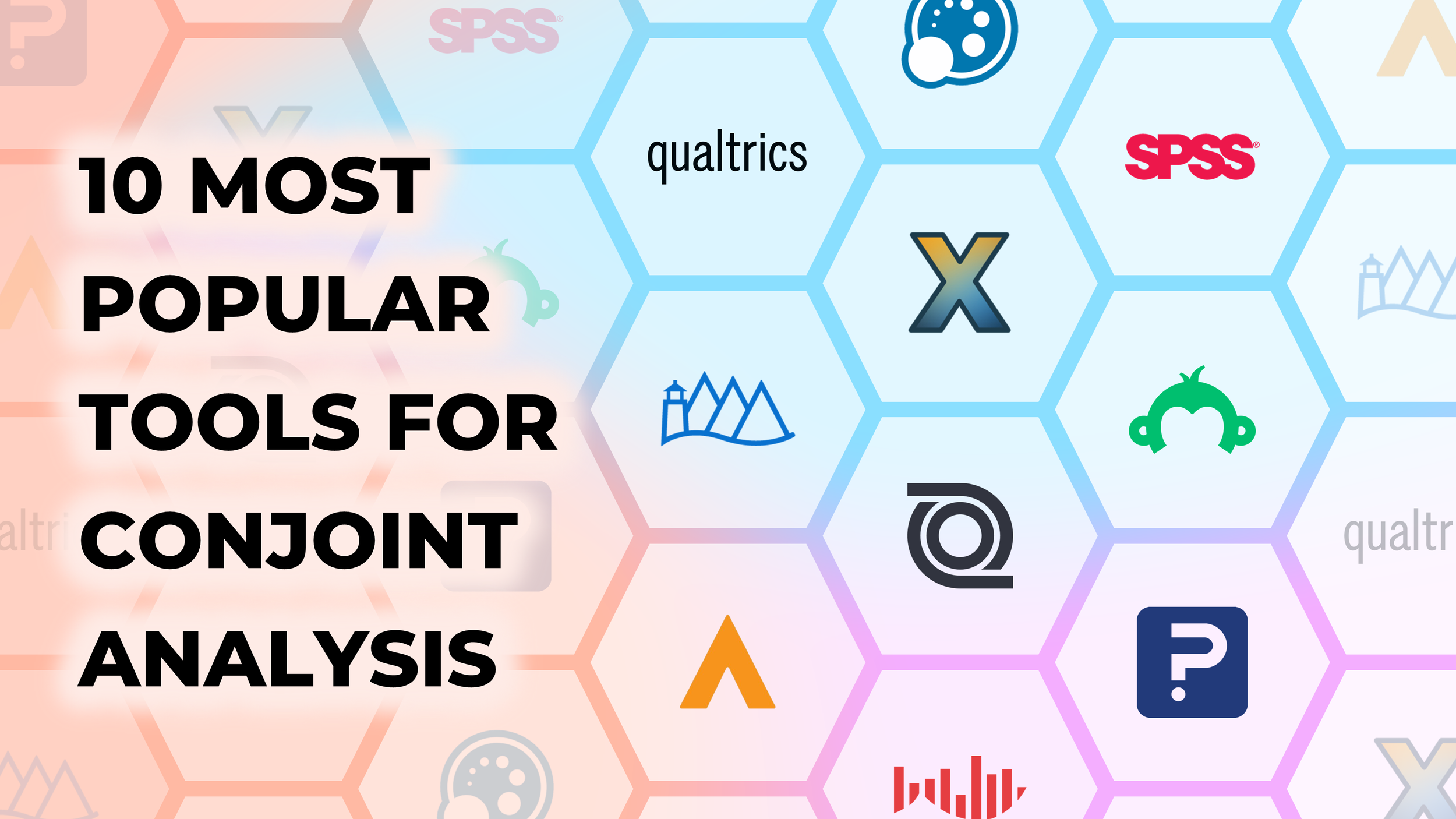
Comparing The Top 10 Most Popular Conjoint Analysis Tools (Free vs Paid)
I reviewed the 10 most popular conjoint analysis tools, comparing their pricing (free vs paid), functionality, usability, and more. Includes Qualtrics, Conjointly, Sawtooth, OpinionX, SurveyMonkey, and more.
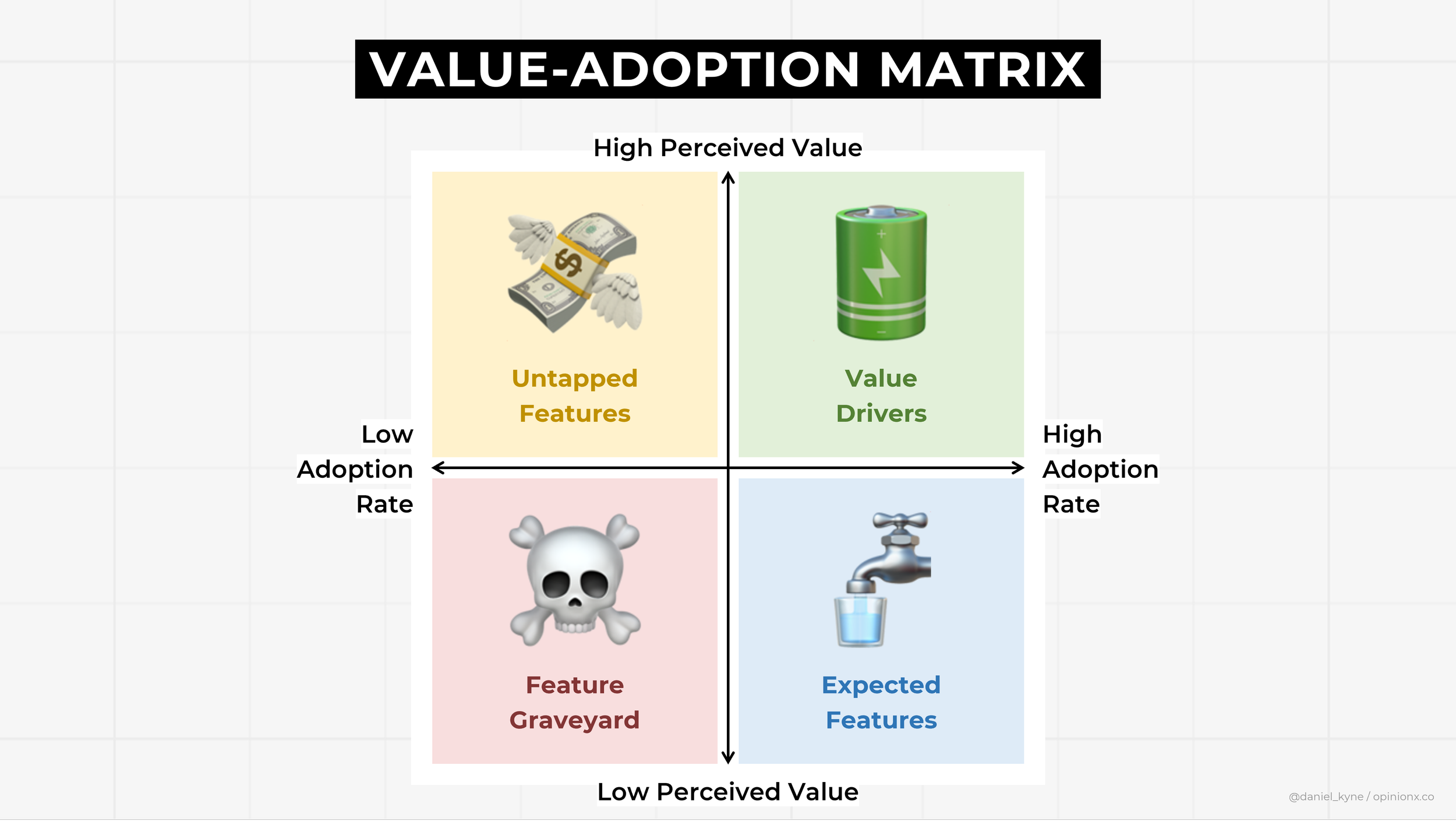
The Value-Adoption Matrix: How To Find Untapped Opportunities In Your Existing Features
A feature can be unused because it's worthless or because nobody's found it yet. The Value-Adoption Matrix tells you which, so you can fix what's already 90% built instead of shipping something new.

4 Alternative Survey Methods To MaxDiff Analysis (Examples)
MaxDiff is great, but not always the right fit. Pairwise comparison, ranked choice voting, points allocation and conjoint all force the same trade-off, and all run free.